
Making a House a Home: Why Wall Art Matters More Than Ever
On digital overwhelm, emotional permanence, and why I photograph pets for walls, not screens.
People already have thousands of photos on their phones. Of their dogs. Their children. Their holidays. Their lives. More photographs than any generation before them, taken more easily, shared more instantly, and - if we are being honest with ourselves - lived with less than almost any generation before them too.
I think about this a lot. Not in a hand-wringing, technology-is-ruining-everything way (I am a nerd, after all) but as someone who spends a great deal of time around people and their dogs, watching how memories actually live - or don't live - in the modern world.
What I notice most often happens during sessions or at dog events, when I am chatting to someone about the dog with them or at home. Something comes up - a funny habit, a particular expression, a moment they love - and they want to show me a photograph. A specific one. Their favourite one.
And then I watch them scroll.
Past screenshots, shopping lists, blurry accidents, fifteen near-identical photographs of the same afternoon, duplicates, memes, things they cannot even remember taking. Sometimes they find the photograph eventually. Sometimes they laugh and give up halfway through, choosing another equally lovely one at random instead, because the one they actually wanted has simply disappeared into the volume of everything else.
That moment, small and ordinary as it is, says something quite significant: this memory exists, but it is not truly accessible. It is stored. It is not seen.
And there is a very real difference between the two.
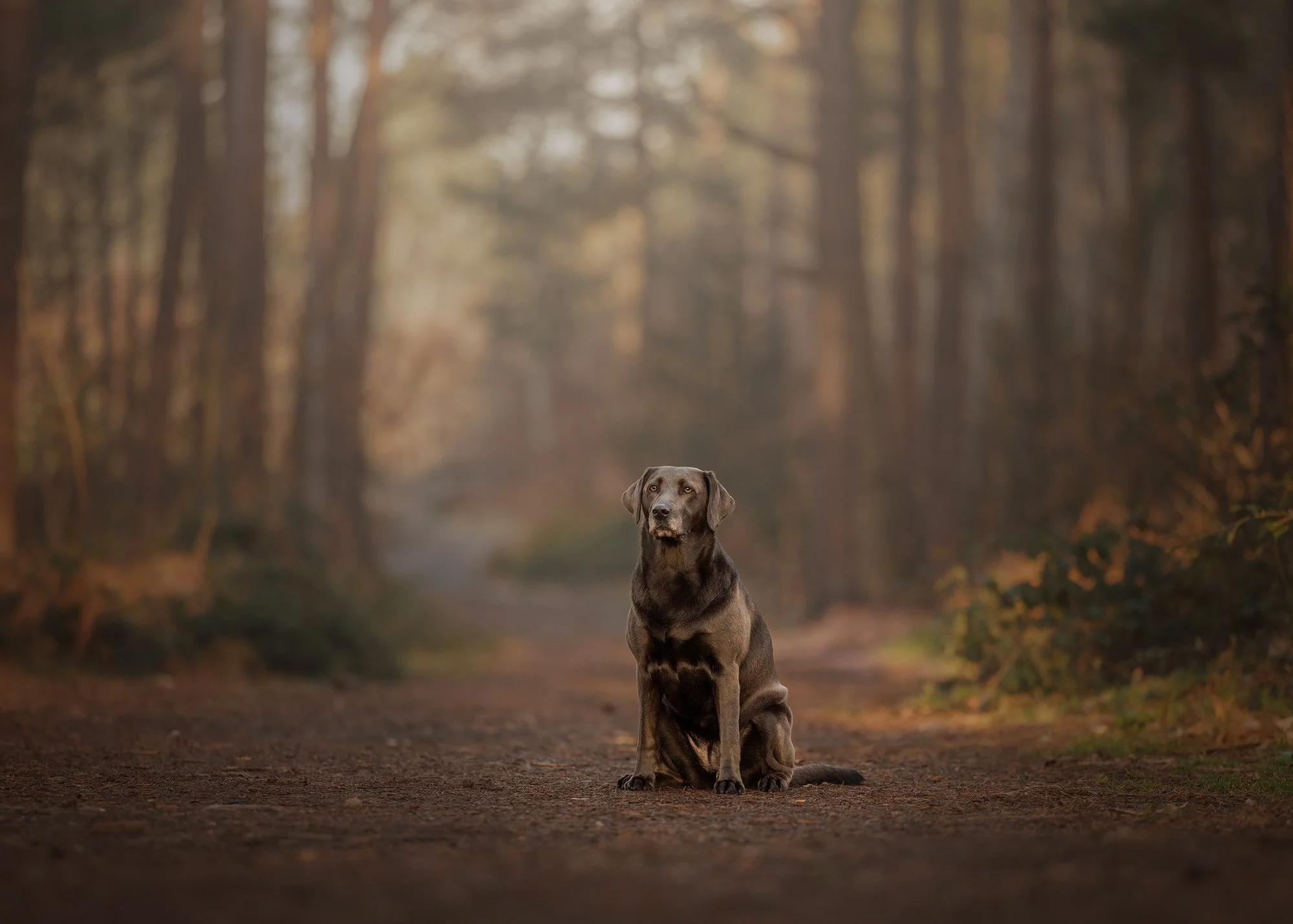
Images composed for walls are composed differently. They become a more considered approach to photographing dogs and the spaces they live within.
The difference between stored and seen
Digital files are genuinely useful. I want to be clear about that, because this is not an argument against them. They are searchable, shareable, backed up, and always with you. They serve a real purpose, and I include a digital version with every physical printed product I deliver, precisely because I think both things matter. Being able to carry an image on your phone and also live with it on your wall are not mutually exclusive, and I never want anyone to feel they have to choose between the two.
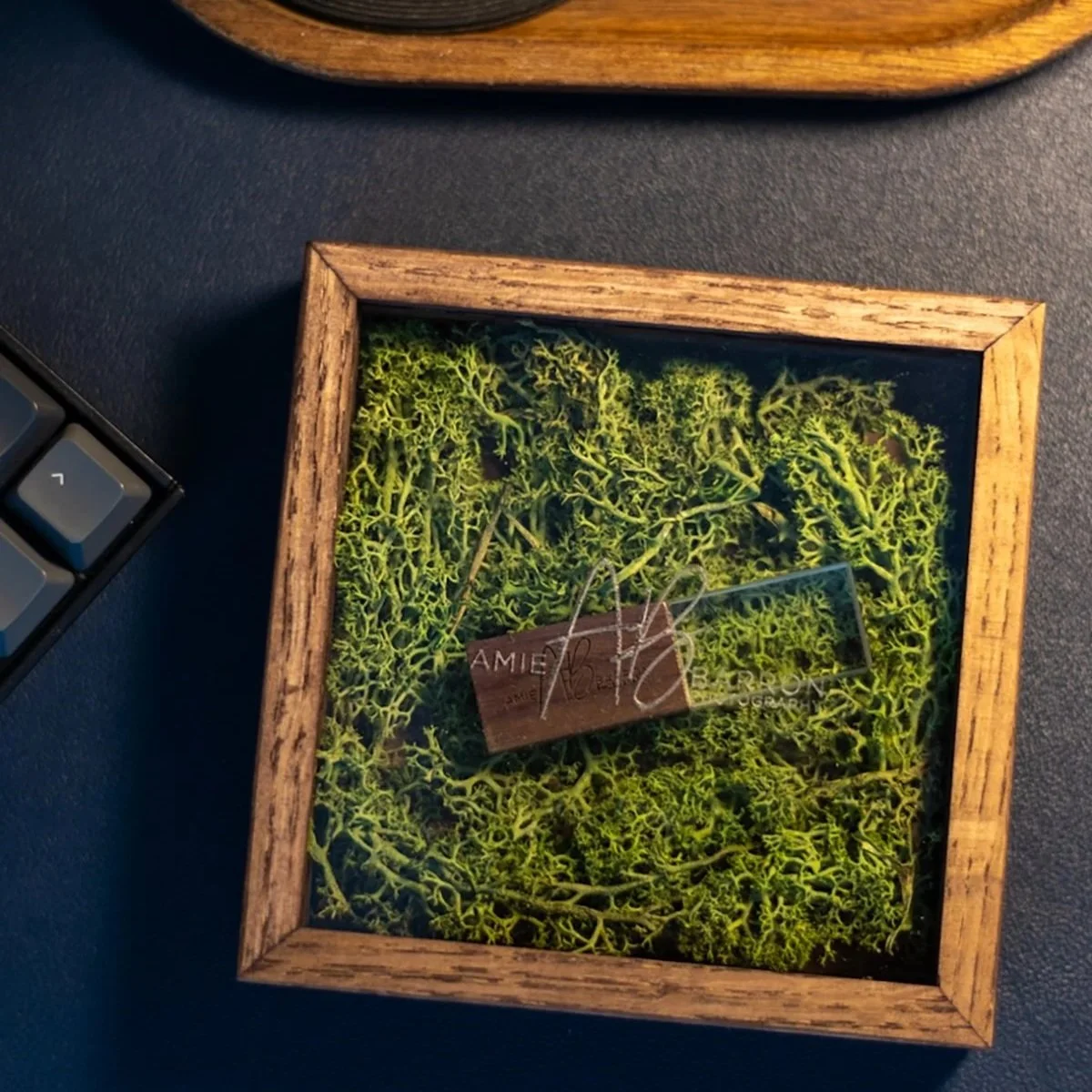
I also offer collections of printable digital files for clients who want the flexibility to print images themselves over time, or to keep a wider collection digitally. Every physical artwork piece I deliver also includes a matching social-resolution digital version for sharing with friends and family, because I think photographs should be able to live in both places: visibly in your home and naturally in your everyday life online.
But there is something that physical photographs do that digital files simply cannot, and it has nothing to do with resolution or print quality or the tactile pleasure of holding something real, although all of those things are true. It is something more subtle and more psychological than that.
A framed photograph does not need to be searched for. It does not compete with notifications, disappear beneath 300 other images, or require you to remember to revisit it. It asks nothing of you at all. It is simply there, in the hallway, on the landing, above the fireplace, at the edge of your eyeline every morning as you make coffee.
And that daily, almost unconscious presence changes everything about how a memory lives.
Wall art becomes part of the home, just as they are.
I genuinely believe this. Not as a selling point, but as an observation I have made again and again - in my own office, which is full of wall art from sessions, including two large panels of Theo that are the centrepiece of the room where I spend most of my working day, and in the homes of clients who message me
months or years after their session to say that they pass their portrait every morning and it still stops them for a moment. Not every day. But often enough to matter.
The difference is not whether digital files matter. Of course they do. It’s that I never want the photographs that matter most to exist only inside a camera roll.
Why seeing something every day changes how we feel about it
There is a reason that the art people choose to live with feels personal in a way that art in a gallery rarely does. It is not just that you chose it, though that matters. It is that repeated, daily visual presence builds an emotional relationship over time that occasional, intentional looking simply does not.
Think about the routes you take through your own home. The hallway you walk down every morning. The wall at the top of the stairs. The corner of the kitchen you face while the kettle boils. These are the spaces where visual anchors settle into your daily life so gradually that you almost stop noticing them consciously - and yet they are quietly shaping your emotional experience of the space. Of home. Of ordinary days.
A portrait of your dog in one of those spaces is not simply decoration. It is a daily reminder of something you love, placed so gently into the rhythm of your life that it stops feeling like a reminder at all and starts feeling like part of the fabric of the house. The way they are part of the fabric of the house.
This is what clients mean, I think, when they see their finished artwork and say the thing I hear most often: "These look like paintings." They are not commenting on technique, exactly. They are recognising that what they are looking at belongs on a wall. That it has the visual weight and emotional presence of something meant to be lived with, not scrolled past.
And honestly, that is always the goal.
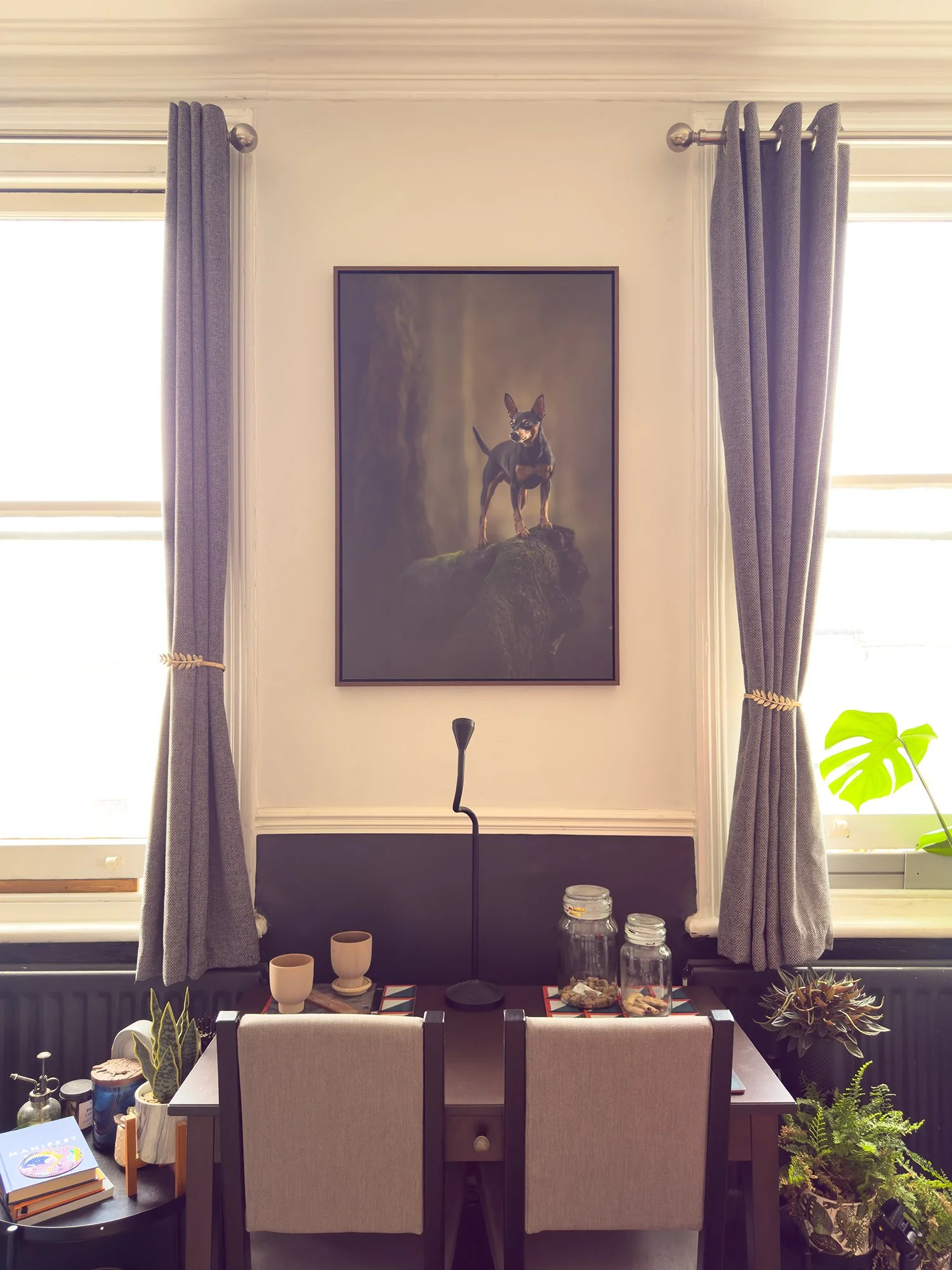
A statement piece changes the room it lives in. This is one of my favourite photographs of my own dog, Theo, on one of the walls in my office.
Why I photograph for walls, not screens
The first time I said this out loud, it was not planned. I was on a session with a client whose dog was small within a wide frame - deliberately so, because I wanted the environment to become part of the portrait. She looked at the back of my camera and said, slightly worried, that on a phone screen she probably would not be able to see her dog very well.
And I said, “oh, I’m not shooting this one for a screen, it would look amazing on
your wall!”
That was the moment I realised it had become my entire approach. I go into almost every session intentionally composing for artwork - for the scale, the negative space, the way a particular frame will settle into a room - unless a client has been very clear from the beginning that they genuinely only want digital files. And even then, more often than not, they see the finished photographs and change their mind. Which is why I always want the options to be there.
This is also why I structure my sessions the way I do - separating the session fee from artwork and products chosen afterwards. I never want someone paying upfront for things they have not yet fallen in love with. That does not feel right to me. What feels right is creating the photographs first, and then letting clients experience them properly before deciding what they want to live with.
Some people want one large statement piece above a fireplace. Some want a wall gallery. Some want a keepsake box of prints. Some want digital files. Some take the complimentary print, and that is enough. All of those are genuinely valid, and none of them is more or less the right answer.
But I will always be honest about what I believe: that the photographs people physically live with tend to become something much bigger emotionally over time than the ones that stay in a camera roll.
Not because digital images do not matter. But because visibility changes emotional connection. And physical photographs are, almost by definition, more visible than digital ones.
If you're looking for a dog photographer in London whose work is designed to live on your walls, you can learn more about my outdoor sessions here.
On legacy, without the heaviness
I want to be careful here, because this part of the conversation can tip very easily into something morbid - into "photograph them before it's too late" territory that I find both manipulative and, frankly, gross. That is not what this is about.
What it is about is something softer. Dogs age slowly enough that we barely notice it happening. The dog you have today, the one currently asleep on your sofa or demanding a walk at an inconvenient hour, is a particular version of themselves that will not exist in quite this way in two or three years. Not because of anything sad. Simply because time moves, and living things move with it.
A photograph made now, printed, and hung on a wall is not a preparation for grief. It is a celebration of the exact dog you have right now, preserved in the texture of a real object that will be part of your home long after you have both changed. Something future-you will walk past and feel something about on an otherwise entirely
ordinary Tuesday.
That is what printed photographs do that almost nothing else can. They take a moment that felt normal at the time and make it permanently, visibly available. Not buried in a phone. Not requiring an intentional search. Just there, as part of the home you share with them.
Not just photos sitting in a camera roll forever, but artwork that feels like part of the home - just like they are.
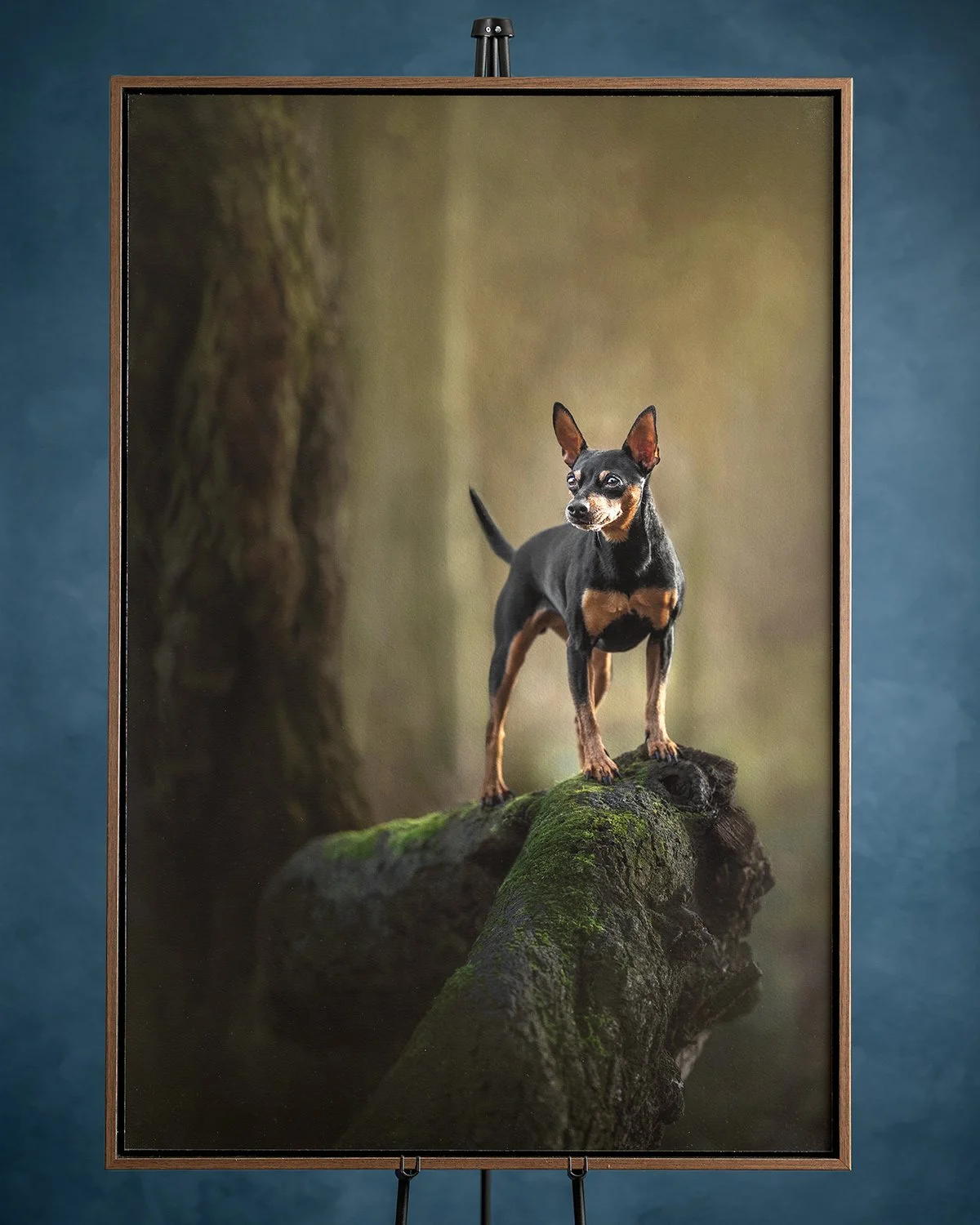
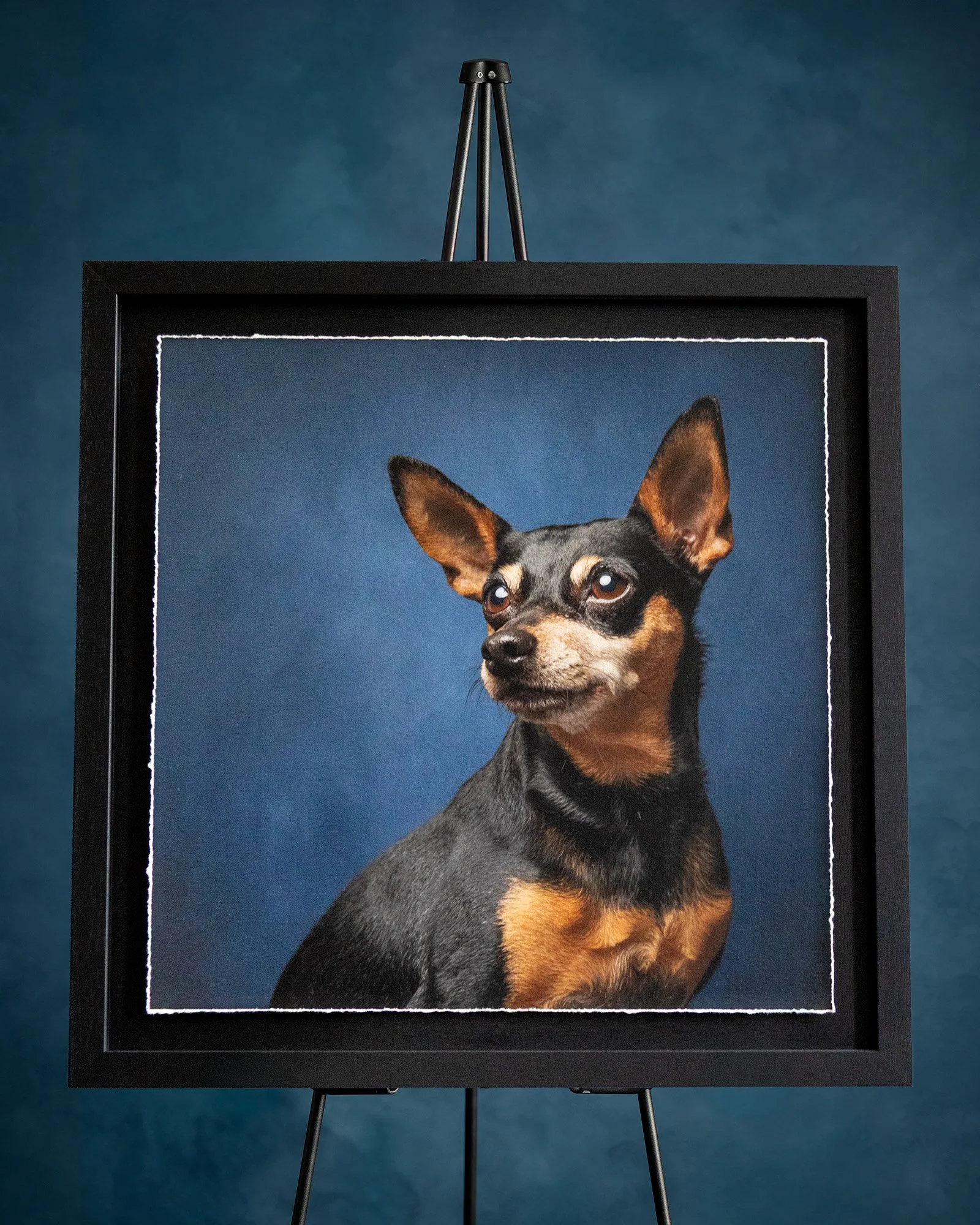
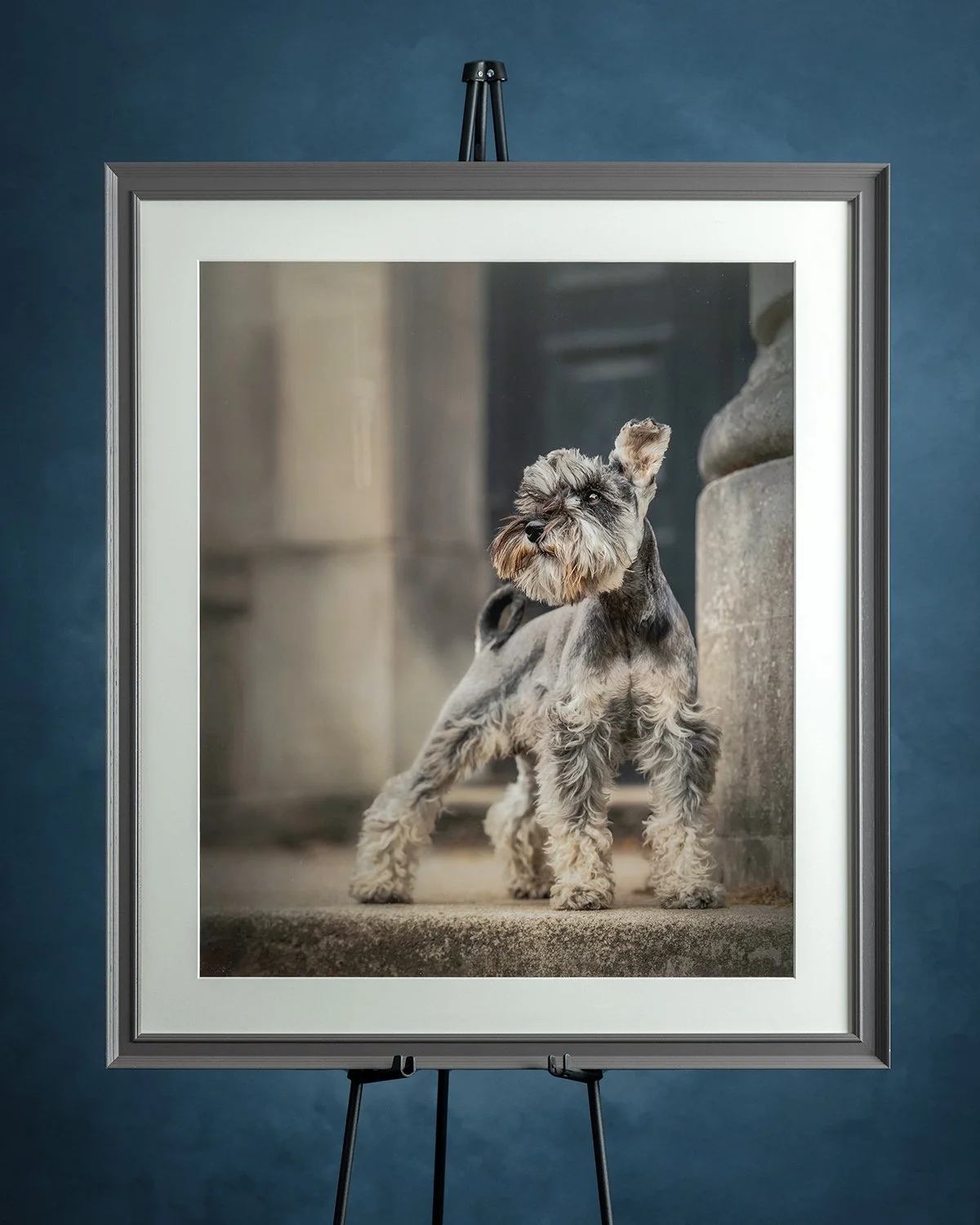
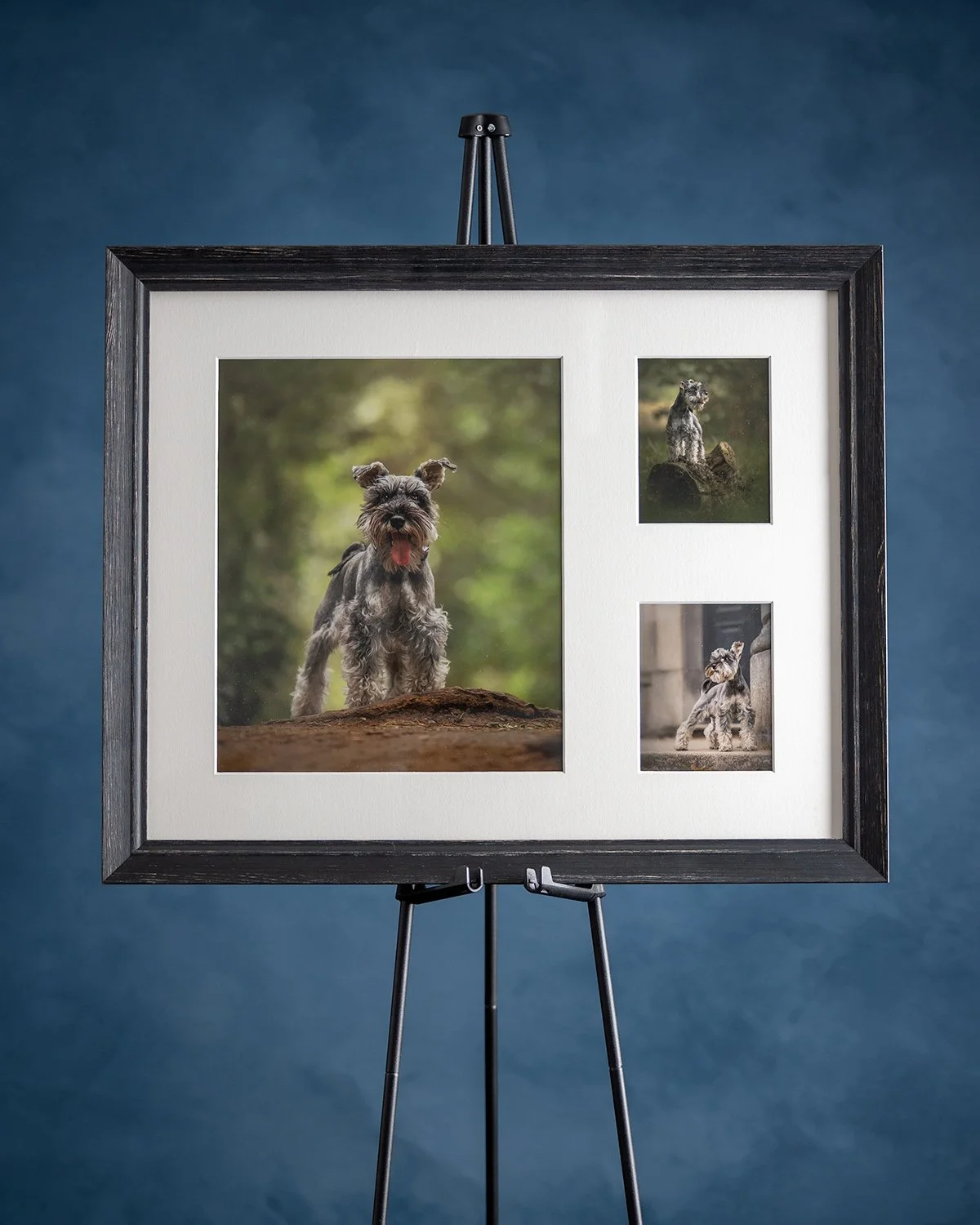
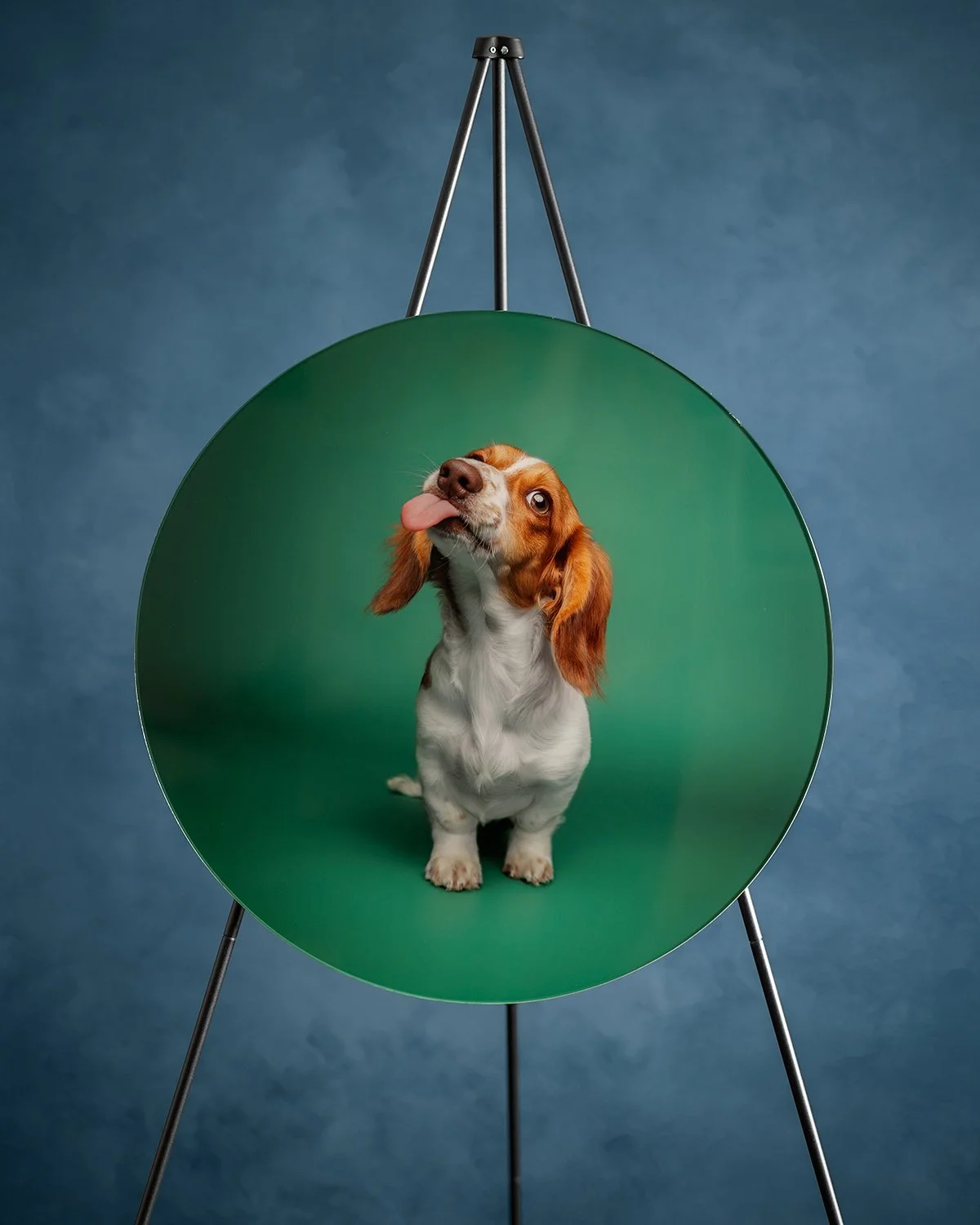
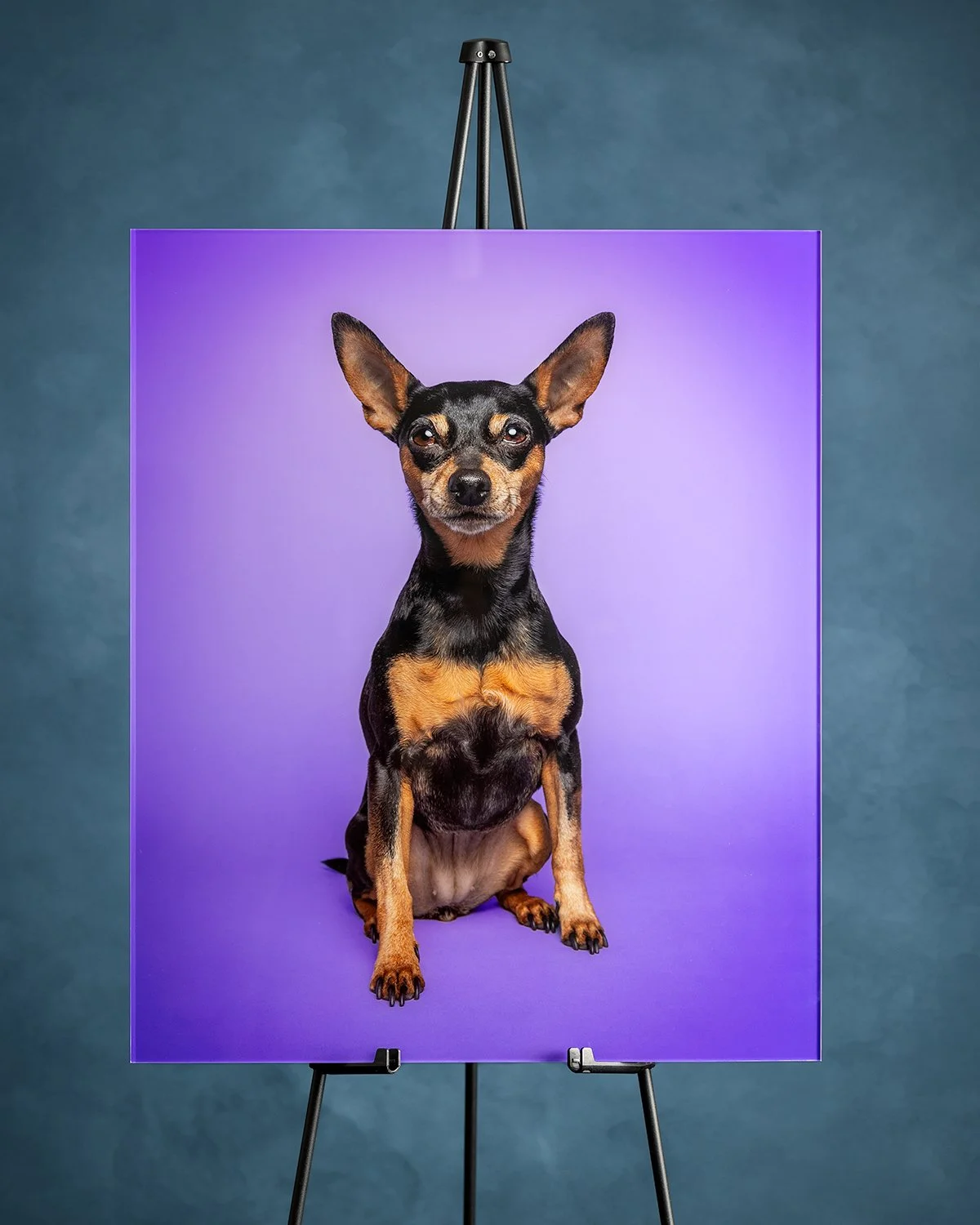
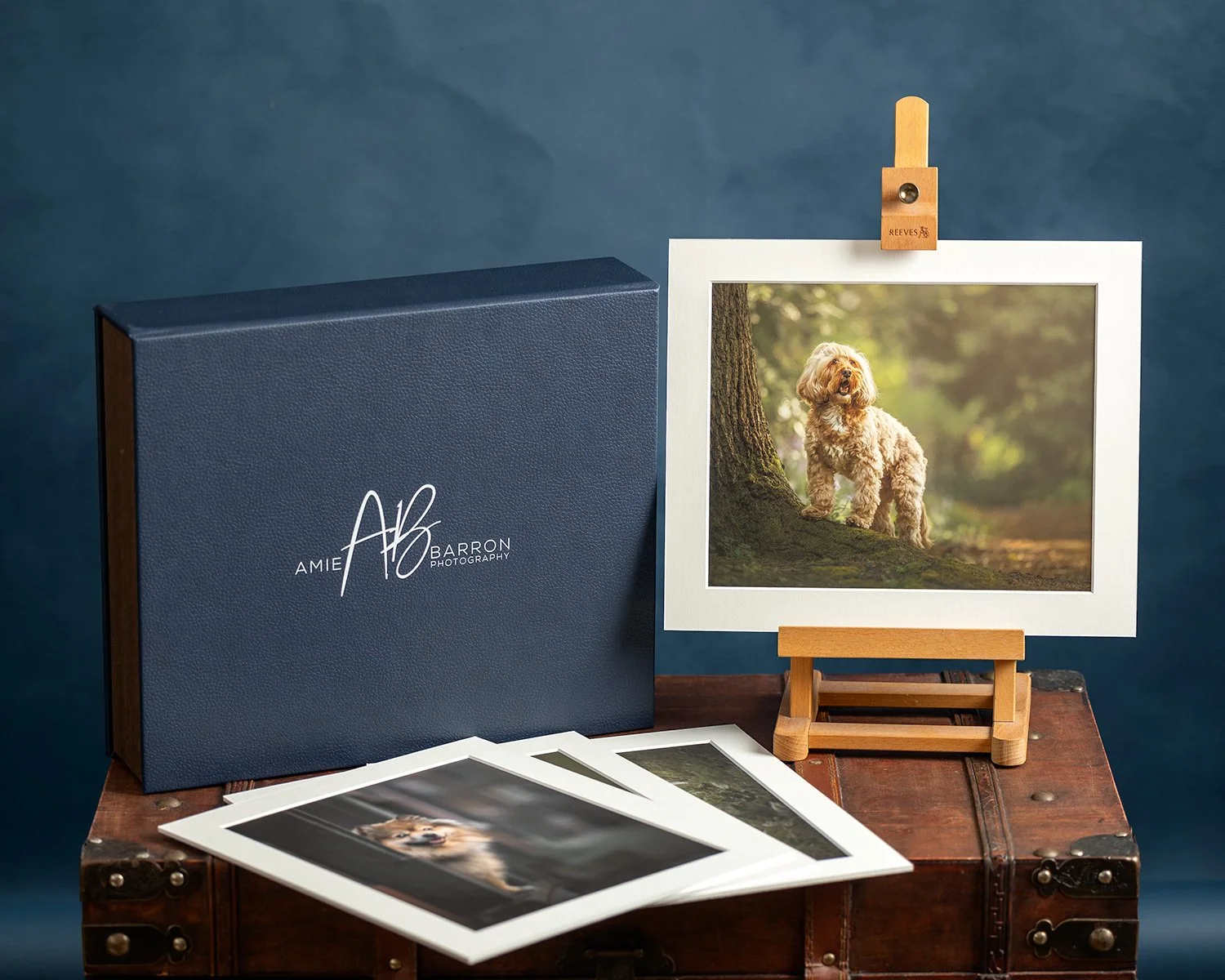
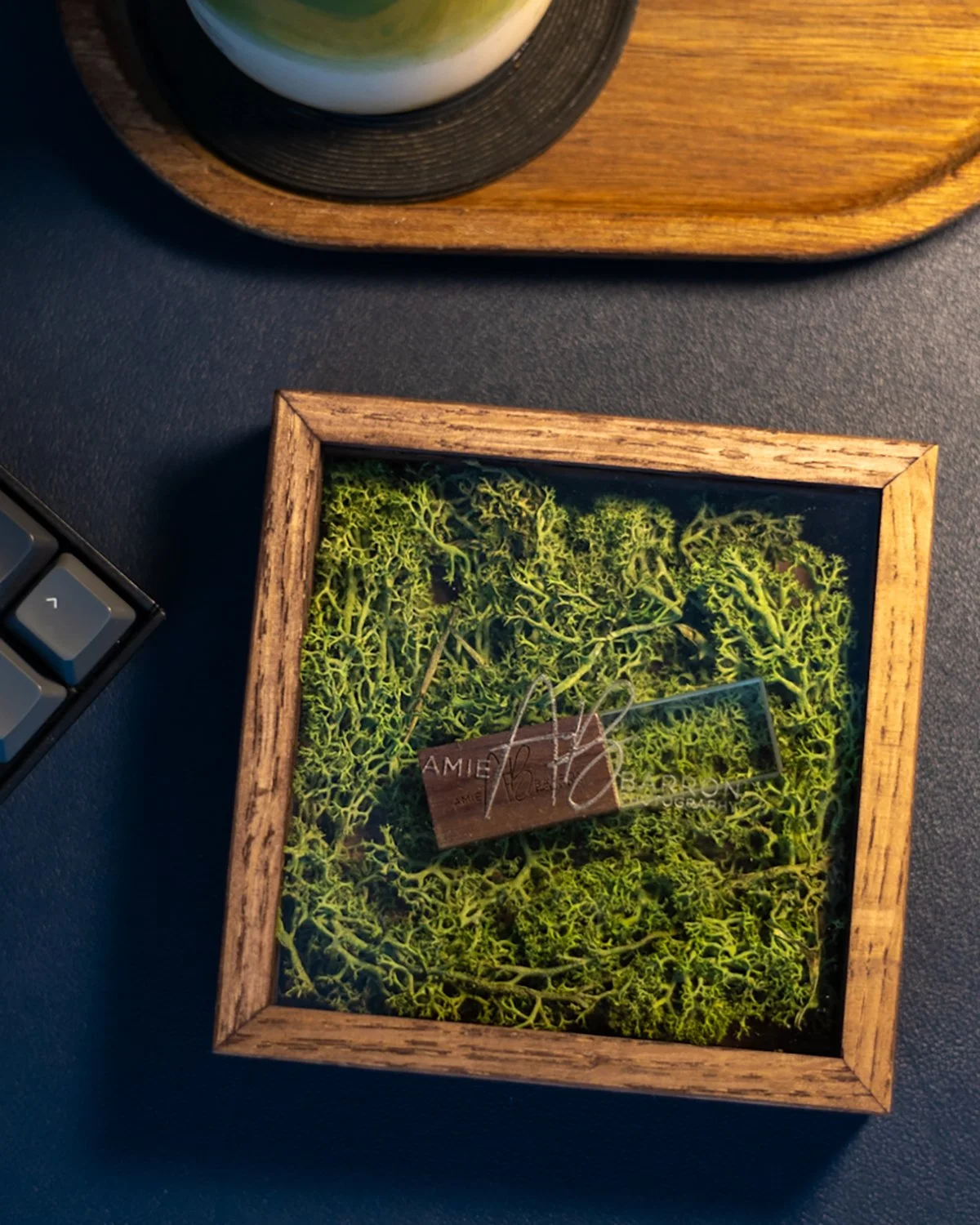
From large statement panels to keepsake print boxes, every product is designed to be lived with rather than stored away. Explore the full Artwork Collection here.
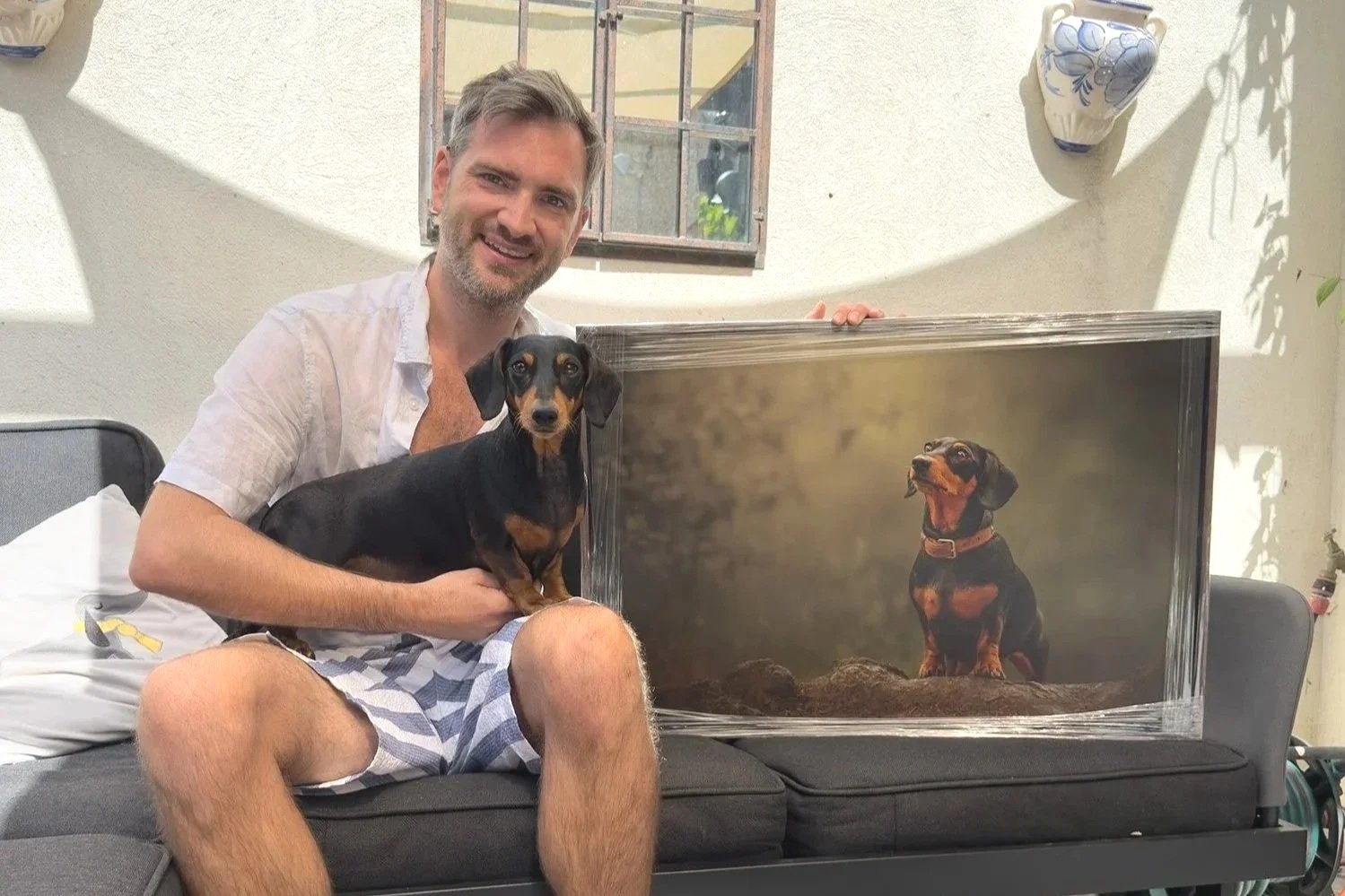
If this has made you think about the photographs already sitting in your phone…
The ones you love but cannot quite find when you want them. The ones that deserve more than a camera roll.
I would love to help you make something you can actually live with. Head to my portrait page to find out more about sessions, products, and what the whole process looks like from start to finish. And if you have questions about anything at all, my inbox is always open.