
Top Dog Walks in London: Wimbledon Common
Dog walks SW19 | Dog photography Wimbledon | Dog-friendly London guide
There is something about Wimbledon Common that is surprisingly difficult to put into words, and I say that as someone who lives nearby and has photographed dogs here more times than I can count. It feels bigger than it looks on a map. Wilder, somehow. Within a few minutes of stepping off the road, the city disappears around you, and something quieter takes over.
I do not actually come here for my own walks as often as people assume. Theo and I have our little meadow close to home, and when we want to properly disappear for a few hours, Esher Common usually wins. But there is something about Wimbledon Common that changes dogs almost immediately, and it is one of the reasons I keep returning here with clients.
The first time I brought Theo here as a young puppy, I remember laughing because she suddenly seemed less like a London dog and more like some tiny, well-behaved woodland creature who had Narnia’ed her way into the wild. Her nose barely left the ground. Every path seemed to hold something worth investigating. She moved differently here - looser, calmer, completely absorbed in the environment around her.
I see that same shift happen during photography sessions all the time.
One of my favourite dachshund photographs was taken here - Amélie, one ear lifted clean off her head by the wind, expression entirely unbothered, magnificently herself. It happened in a split second and is, I think, absolutely perfect. You can read all about her session here.
If you are looking for a dog walk in south-west London that offers genuine variety, beautiful woodland, open space, and the kind of environment where your dog can decompress rather than simply exercise, Wimbledon Common is one of the loveliest places to wander.
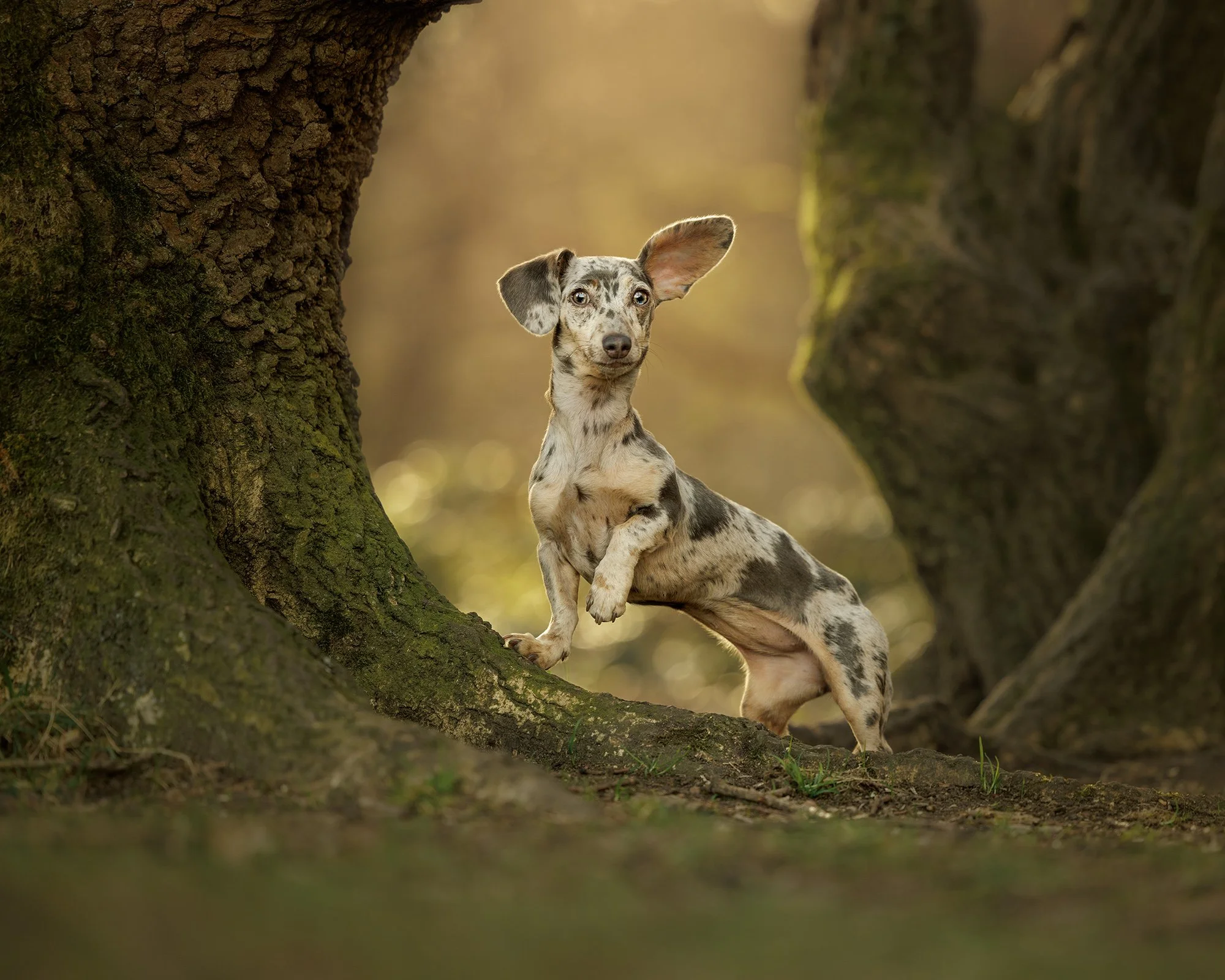
This is still one of my favourite photographs from Wimbledon Common. Completely unplanned, completely her. Explore Outdoor Sessions.
What makes Wimbledon Common so special for dogs?
Wimbledon Common covers more than 460 hectares of woodland, heathland, grassland, and open space, so it never really feels repetitive, unlike some city parks. You can move from wide open heathland to narrow woodland paths within minutes. One section smells dry and sandy in summer, the next smells damp even on warm days.
There are sandy bridleways edged with mature trees, broad open stretches across The Plain, quieter woodland trails, and three lakes scattered through the landscape - King’s Mere, the Curling Pond, and Queensmere - all with entirely different atmospheres.
Some dogs arrive here and immediately start charging about with the sort of joy that makes everyone nearby smile. Others slow down instead. They sniff more carefully. Their lead goes slack for the first time all week. Nervous dogs often seem to exhale here.
I have watched dachshunds disappear into bracken here like tiny cryptids, appearing moments later with tongues lolling happily.
That constant variety is what makes the Common work so well for different dogs.
A confident off-lead dog can explore and range ahead. A long-line dog can wander at their own pace without feeling crowded. More sensitive dogs can usually find quieter corners away from the busiest areas near the Windmill.
And because the landscape changes constantly, the walk never really feels static for the humans either.
As a photographer, I am especially drawn here in late spring and early summer, when the woodland canopy fills in properly, and everything takes on that rich green colour that only seems to last for a few weeks before London gets dusty again.
But honestly, every season changes the Common in a way that feels worth checking out.
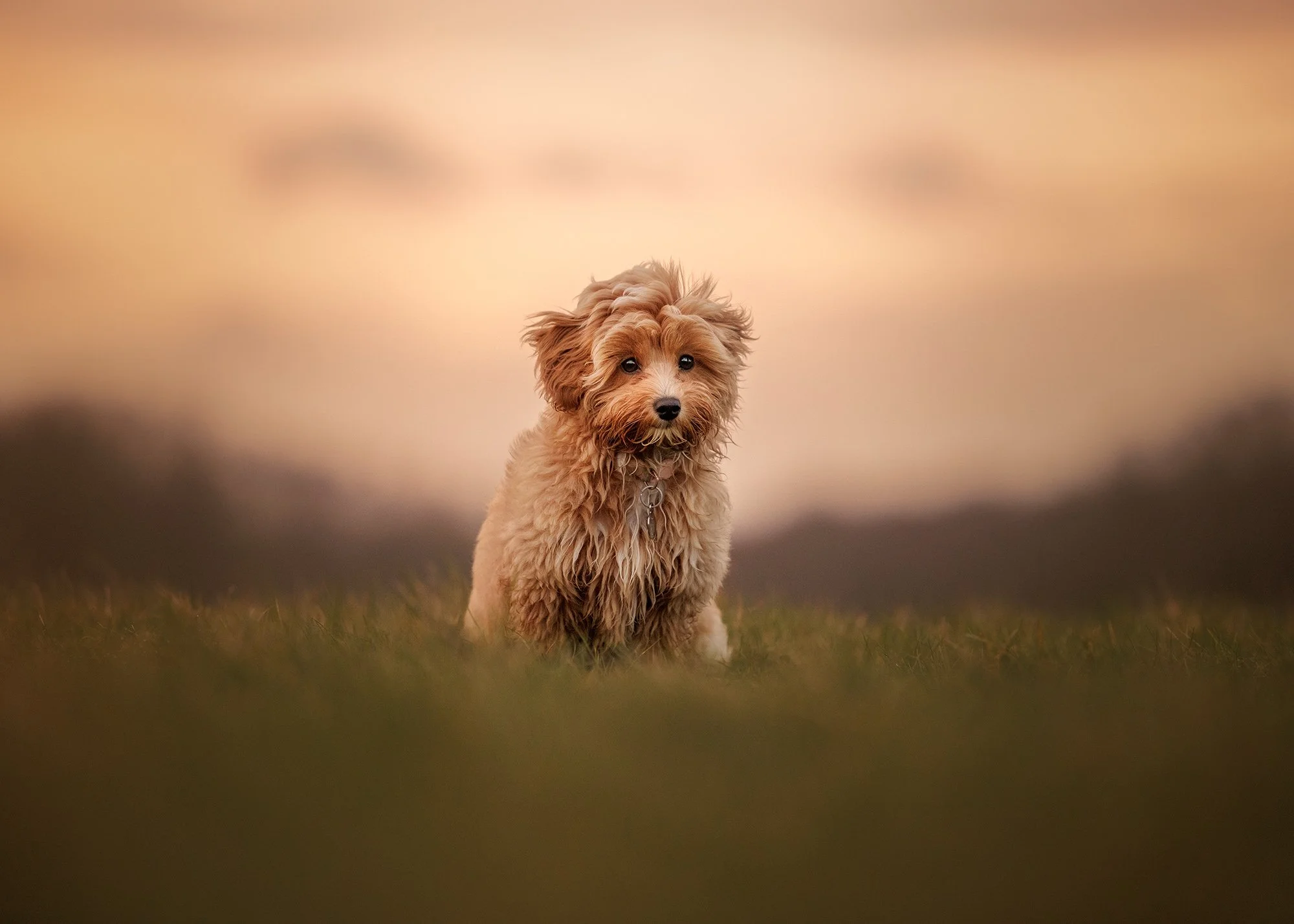
Love to capture moments like this when your puppy first joins your family? Explore my Puppy Package.
Where exactly is Wimbledon Common?
Wimbledon Common sits on the south-west edge of London, between Wimbledon Village and Putney Heath, and forms part of a wider network of connected green spaces stretching towards Richmond Park.
One of the reasons the Common still feels so wonderfully unpolished is that local residents fought to protect it from enclosure in the nineteenth century.
I think you can still feel that now. It does not feel overly manicured or designed. Paths twist unexpectedly. Woodland edges spill into heathland. Dogs come back muddy even when you were convinced you stayed on the dry route.
The Wimbledon Windmill is probably the Common’s most recognisable landmark. Built in 1817, it sits right at the heart of the landscape and somehow manages to feel both slightly surreal and completely at home there. There is something oddly lovely about seeing a windmill rise out of south-west London woodland.
It also makes a very useful meeting point if you are visiting for the first time.
Opening times and access
Open access - no entry fee and no formal opening hours.
The Common is generally used from dawn until dusk.
Parking
Wimbledon Windmill Car Park (SW19 5NQ)
Usually open from 6.00am - 9.00pm, although seasonal hours can vary.
Springwell Car Park (SW19 4UW - via Sunset Road)
Generally open dawn to dusk.
There is very limited additional parking around Windmill Road itself, so weekends can get busy quickly.
Getting there
By car
The Windmill Car Park is the easiest starting point for most visitors, especially if it is your first time exploring the Common. It places you straight into the heart of the woodland and close to the Windmill Tearooms.
Springwell Car Park is a good alternative if the Windmill entrance is busy, particularly on sunny weekends.
By public transport
Wimbledon Station is the most practical rail connection, served by the District line, Thameslink, and South Western Railway.
From there, the 93 bus runs towards Putney and stops along Windmill Road.
The walk from Wimbledon Station to the Windmill is about a mile and a half and mostly uphill, which is worth knowing in advance if you are carrying camera gear, managing an excitable dog, or both.
Which dogs tend to enjoy Wimbledon Common most?
Confident off-lead dogs
Yes - provided they are comfortable sharing space thoughtfully.
There are horses on Wimbledon Common, alongside cyclists, golfers, runners, and plenty of other dogs. For dogs with reliable recall and good awareness around horses, the Common can feel wonderfully open.
Long-line and sniffy dogs
This is probably one of Wimbledon Common’s greatest strengths.
The scent picture here is ridiculous in the best possible way: damp woodland floor, fox trails, stagnant-pond smells, sandy bridleways, wet leaves.
Theo once spent nearly ten minutes investigating the same patch of ground here as a puppy with the seriousness of a detective solving a crime.
The wider paths also mean long lines tend to work well without constantly tangling.
A dog who loves sniffing will probably sleep very well after a visit here.
Nervous or reactive dogs
Yes, with a little planning.
The areas around the Windmill and lakes are usually busiest, particularly on warm weekends, but the Common is large enough that quieter routes are very possible.
Early mornings tend to be noticeably calmer.
The woodland paths are often easier for reactive dogs because there is more opportunity to create distance naturally without making a big deal of it.

One thing worth considering in advance is the presence of horses. They are a genuine part of the landscape here, and if your dog is unfamiliar or uncomfortable around them, choosing quieter sections first can make a big difference.
Dogs who love water
King’s Mere is generally considered the most dog-friendly of the lakes for a paddle.
That said, there are seasonal restrictions in place between 1st March and 31st August to protect breeding wildfowl and nesting birds, and dogs should be kept out of the ponds during that period.
Outside nesting season, Beverley Brook can also be a lovely option for dogs who enjoy moving water.
Older dogs or dogs with mobility considerations
The wider plateau around the Windmill is relatively flat and easier to walk on than some of the woodland trails.
Some routes include exposed roots, uneven ground, and muddier inclines, so choosing your route in advance helps.
The good thing about Wimbledon Common is that even a shorter walk still feels rich and interesting. You do not need to cover miles for a dog to enjoy themselves here.
Image suggestion: A dog sitting calmly on a woodland path, looking back at the camera with relaxed body language.
The quieter woodland routes can feel much gentler for nervous dogs than the more open sections near the lakes.
If you have ever wondered what a photography session in a place like this might feel like, I would love to show you. If you are looking for a dog photographer in London, you can learn more about my outdoor sessions here.
Things to be aware of - in the nicest possible way
Part of Wimbledon Common’s charm is that it still feels genuinely wild in places.
But like any shared natural space, it works best when everyone approaches it thoughtfully.
Horses are a regular presence, particularly along the bridleways. If your dog has never encountered them before, it is worth choosing a quieter route initially so the experience stays positive.
Seasonal wildlife restrictions come into effect between 1st March and 31st August, particularly around The Plain and Queensmere, where dogs must remain on a lead to protect nesting birds.
The Common is a Site of Special Scientific Interest, and honestly, one of the nicest things about walking here is that people generally do seem to care about preserving it.
Waste bins become more spread out once you move away from the car parks, so bringing extra bags is sensible.
And yes - parts of the Common become extremely muddy after rain.
This is not really a complaint.
It is simply part of the experience.
There is something satisfying about arriving home with muddy boots, a damp towel in the boot of the car, and a dog who falls asleep almost before you get through the front door.
Golfers also share sections of the Common, particularly near the golf course crossings. Most people navigate this perfectly politely without issue.
It is one of those rare London spaces that still feels genuinely shared.
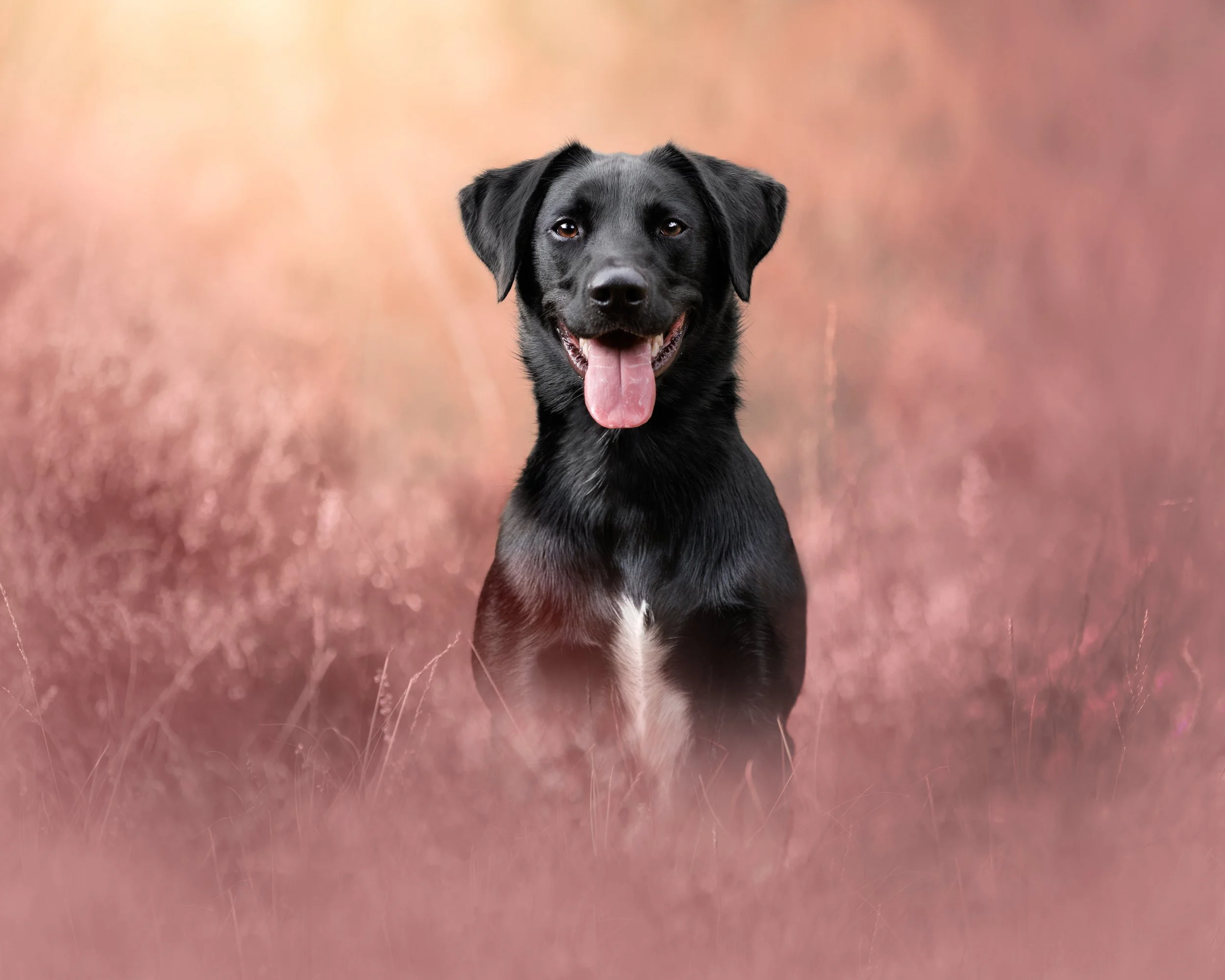
A photographer’s perspective on Wimbledon Common
I will admit that I love Wimbledon Common most when it is properly green.
Late spring and early summer are when I love it most.
The woodland canopy fills in properly, the paths turn intensely green, and the light beneath the trees becomes soft enough that dogs seem to glow slightly around the edges.
If you are there early enough for a sunrise session like I often am, you may even get lucky and spot baby rabbits darting through the long grass before the Common properly wakes up.
That is usually when I feel most drawn to photographing dogs here.
But honestly, every season changes the landscape in a way that gives it a different kind of character.
Autumn turns the heathland rusty and gold. Winter strips everything back and leaves the tree roots slick with frost on cold mornings. Spring arrives with birdsong and dogs who suddenly seem incapable of walking in a straight line because there is simply too much to smell.
What I appreciate most as a photographer is that the Common gives dogs space to decompress before we even begin.
A dog who has spent ten minutes sniffing, wandering, and settling into the environment is completely different from a dog who has stepped straight out of the car full of anticipation.
The best photographs nearly always happen after that moment.
Not when the dog is performing, but when they are simply present.
Seasonal notes from real visits
Spring
Spring on Wimbledon Common feels soft and busy all at once - birdsong overhead, fresh growth everywhere, dogs rediscovering every scent trail they somehow forgot existed over winter.
The woodland light is especially beautiful at this time of year.
Just remember the seasonal lead restrictions begin from 1st March.
Summer
Summer is when the Common feels most alive and most popular.
The areas around the Windmill and lakes become noticeably busier on warm days, so early mornings are usually far more comfortable for dogs.
The heathland smells incredible in warm weather, particularly after light rain.
Autumn
Possibly my favourite season for walks here.
The woodland floor becomes thick with leaves, the light turns golden, and the whole Common feels calmer after summer.
It is a particularly lovely time to visit with dogs who struggle around crowds.
Winter
Still absolutely worth visiting.
The sandy paths help on frosty mornings, and the openness of the landscape means even grey days feel expansive rather than gloomy.
And on the rare occasions London gets snow, Wimbledon Common becomes magical.
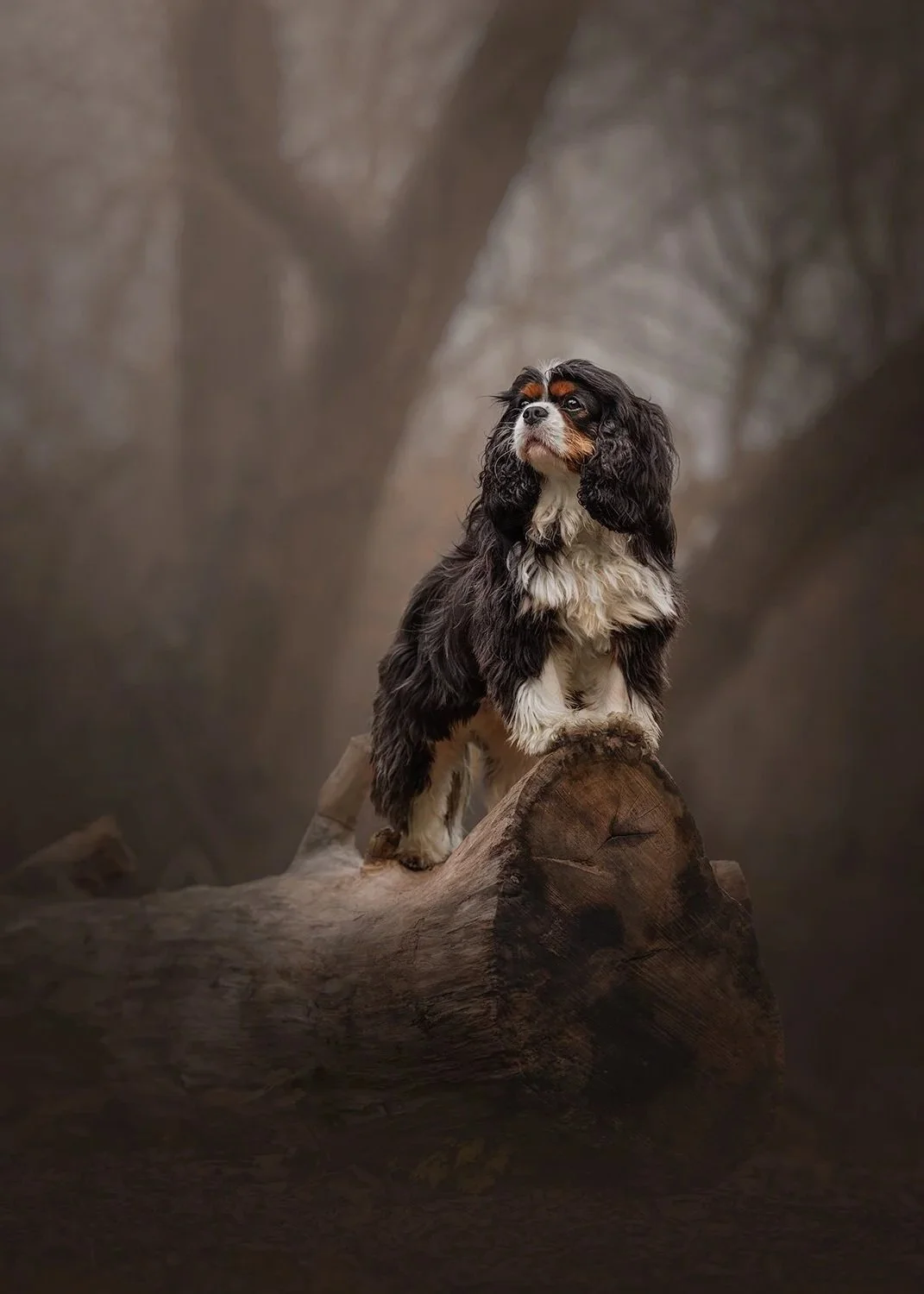
Things to do after your walk
One of the nicest things about Wimbledon Common is how naturally it spills into Wimbledon Village afterwards.
You can finish a rejuvenating woodland walk and end up sitting outside a lovely pub half an hour later, wondering whether your dog has had as great a day as you have.
The Windmill Tearooms
An obvious choice, but for good reason.
The Tearooms sit right beside the Windmill and have been welcoming walkers since 1970. There is indoor seating, outdoor tables, water bowls for dogs, and usually at least one muddy spaniel asleep under a chair.
The Hand in Hand
Right on the edge of the Common at Crooked Billet, the Hand in Hand has become something of an institution among local dog walkers.
Dogs are greeted warmly, biscuits appear quickly, and on sunny afternoons, the outdoor seating spills right onto the Common itself.
The Crooked Billet
Next door to the Hand in Hand and sharing that same lovely corner of Wimbledon Common.
Cosy in winter, lively in summer, and reliably welcoming to dogs year-round.
The Dog and Fox
If you want more of a Wimbledon Village atmosphere afterwards, the Dog and Fox is the classic choice.
Large beer garden, dog-friendly throughout, and usually full of walkers who have slightly underestimated how muddy the Common would be.
The Fox and Grapes
A lovely gastro pub on the edge of the Common with boutique rooms upstairs and a genuinely cosy atmosphere.
Ideal if you want your post-walk stop to feel slightly more leisurely.
Practical notes before you go
Bring water for your dog in warmer weather, particularly if you are exploring the more open sections of the Common.
Waste bins exist, but they are not evenly distributed once you move deeper into the woodland.
Dogs must legally be microchipped and wear a tag with your contact details.
And if your dog is reactive around horses, it is worth planning your timing and route carefully before visiting.
Mostly though, Wimbledon Common rewards slower walking.
It is the sort of place where you set out intending to do a quick loop and somehow end up wandering for two hours because your dog looks so happy you cannot quite bring yourself to turn back yet.
A good dog walk does not just exercise a dog. It changes the shape of a day.
You notice more. You slow down. Your phone stays in your pocket longer.
And some of the moments people end up treasuring most are not the big occasions at all, but ordinary mornings spent watching their dog trot ahead along a woodland path, nose down, entirely content.
And some of the moments people end up treasuring most are not the big occasions at all, but ordinary mornings spent watching their dog trot ahead along a woodland path, entirely content.
Those are exactly the moments I love photographing.
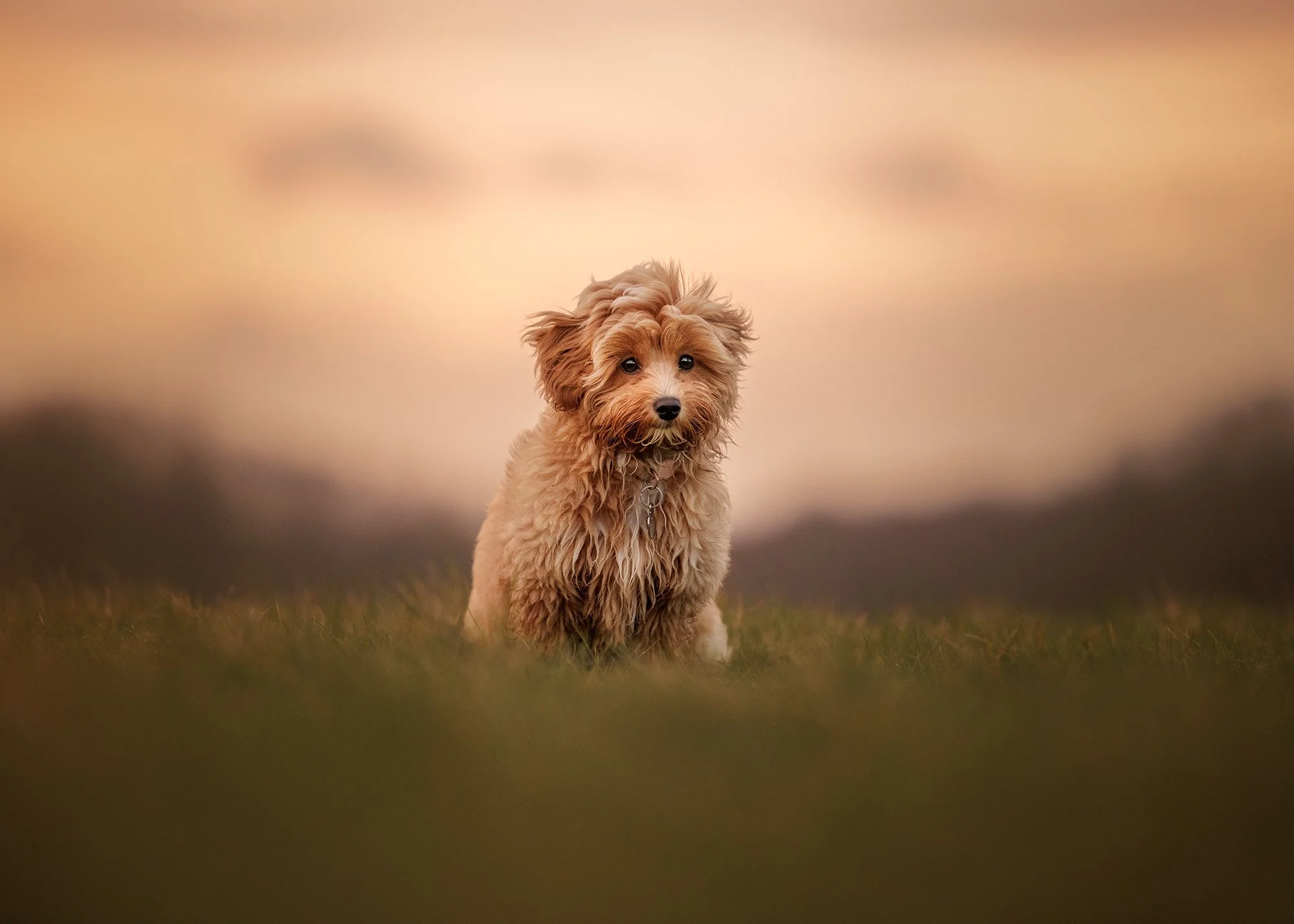
If a walk here has ever made you wish you could hold onto a version of your dog exactly as they are right now
muddy paws, bright eyes, nose full of woodland smells - I would love to help you do that.
You can explore my outdoor portrait sessions here.