No Training? No Problem: What It Really Takes to Get Beautiful Photos of Your Dog
Dog photography London | For energetic, reactive, and "untrained" dogs
There is one question I hear more than almost any other when someone first gets in touch with me. It comes in different forms, but it always means the same thing. “My dog might not sit. Will that be a problem?”
Sometimes it arrives as a disclaimer. She doesn't really do commands. Sometimes it's a gentle apology before we've even spoken properly. He's very excitable, and I'm not sure he'd stay still long enough. And occasionally it comes wrapped in genuine worry, from someone who loves their dog completely and simply can't imagine how a session could work when their dog's idea of posing is spinning in circles and eating grass.
So let me say this clearly, before we go any further: your dog does not need to be trained to have beautiful photographs taken of them. They don't need to know how to sit on command, hold a stay, or do anything remotely resembling what you might see in an obedience class. What they need to do is show up, be themselves, and ideally have an opinion about snacks.
That's it. That's the whole requirement.
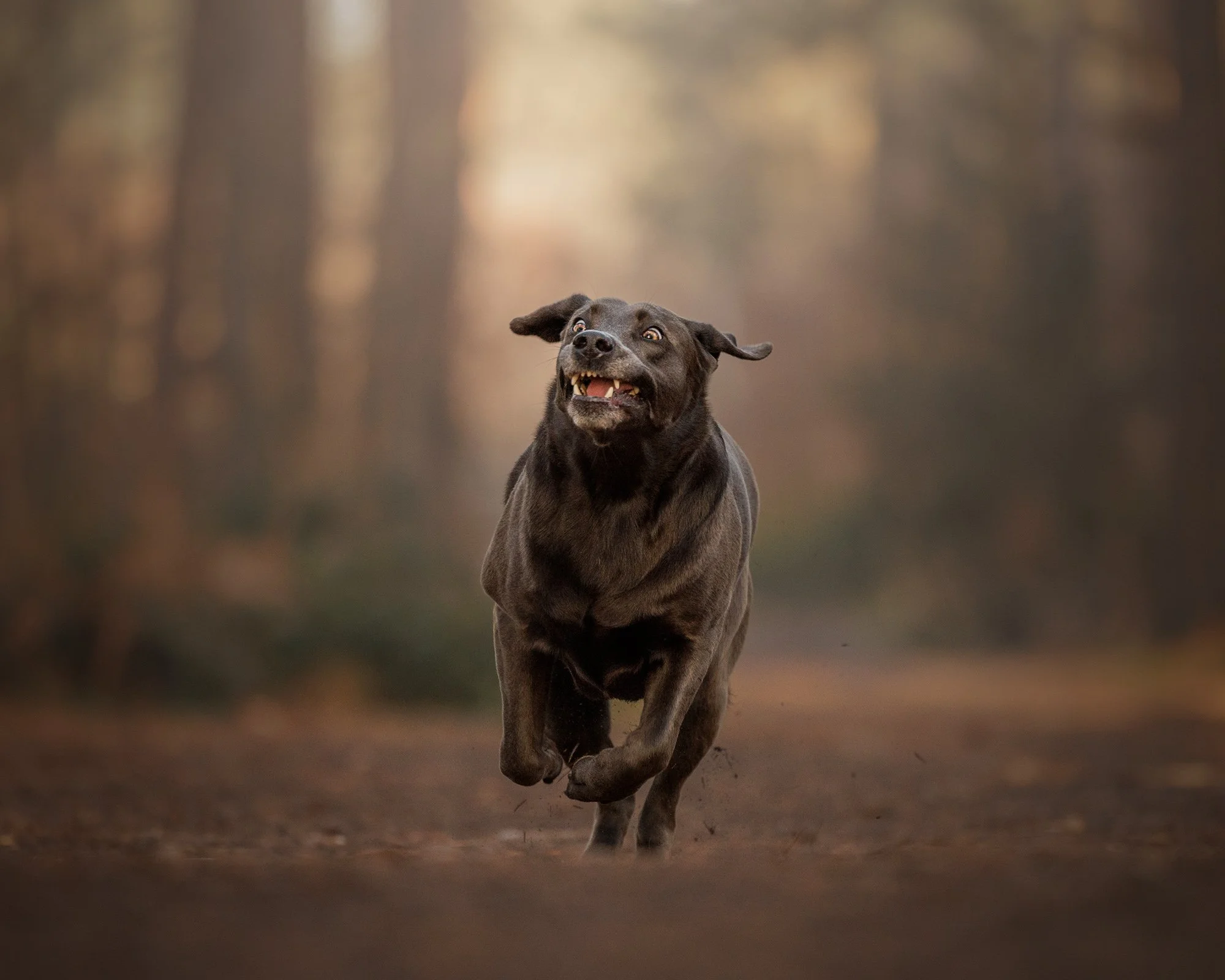
The moments that can't be staged are always the ones worth saving forever. Explore Outdoor Sessions
Where this belief comes from
I should tell you something about how I work, because it explains everything about why I'm not especially bothered by whether your dog has ever been to a training class in their life.
I have aphantasia. It means I can't visualise anything in my own head. There are no pre-planned compositions stored somewhere in my mind, no ideal image I'm trying to recreate. Instead, I am constantly reading the environment around me in real time, looking for shapes, light, and natural frames as we move through a space together. I always joke with my clients that sessions are as positively mentally stimulating for the dogs as they are for me, which is genuinely true, just for very different reasons.
What this means in practice is that I'm not arriving at a session with a rigid plan that your dog needs to fit into. I'm arriving with curiosity. I assess each dog fairly quickly at the beginning, starting with something simple so I can get a feel for how they move, what motivates them, how much they already know, and how they work with their person. From there, I use luring and rewarding techniques to show you how to gently guide your dog into the frames I've found, frames shaped by the environment, the light, and your dog's own natural body language rather than by anything posed or forced.
Most of the time, I'm simply asking a dog to be within a certain area. The composition happens on my side. Your dog just needs to be there.

The best sessions are conversations, not performances.
Let's talk about "trained"
When clients tell me their dog isn't trained, I usually ask them a follow-up question: Does your dog know how to stand and move around the world? Can they do a sit, even occasionally? Do they go a bit wild for a particular treat?
Because here's the honest truth. On a consultation call, I always ask about behaviours and tricks a dog already knows. And nine times out of ten, the answer is: sit. Maybe paw. That's the whole list.
And that is absolutely fine. More than fine, actually. I can teach a dog to go from a sit to a stand in under a minute. Will they do a down in damp grass? Probably not, but if they do, that’s awesome! Do I need them to? Genuinely, no. The intermediate-looking poses that make for a really beautiful portrait are often far simpler to achieve than people expect, because I'm working with the dog's natural movement and energy rather than asking them to hold still for longer than they're comfortable with.
The dogs who are most familiar with a camera, the ones who associate the click of a shutter with training cues and rewards, are dogs like my own Theo. Dogs who've grown up around photographers who also love behaviour and training. That is not a standard I hold anyone else's dog to, and frankly, you wouldn't want fifteen photographs of your dog sitting. Sitting. Just sitting.
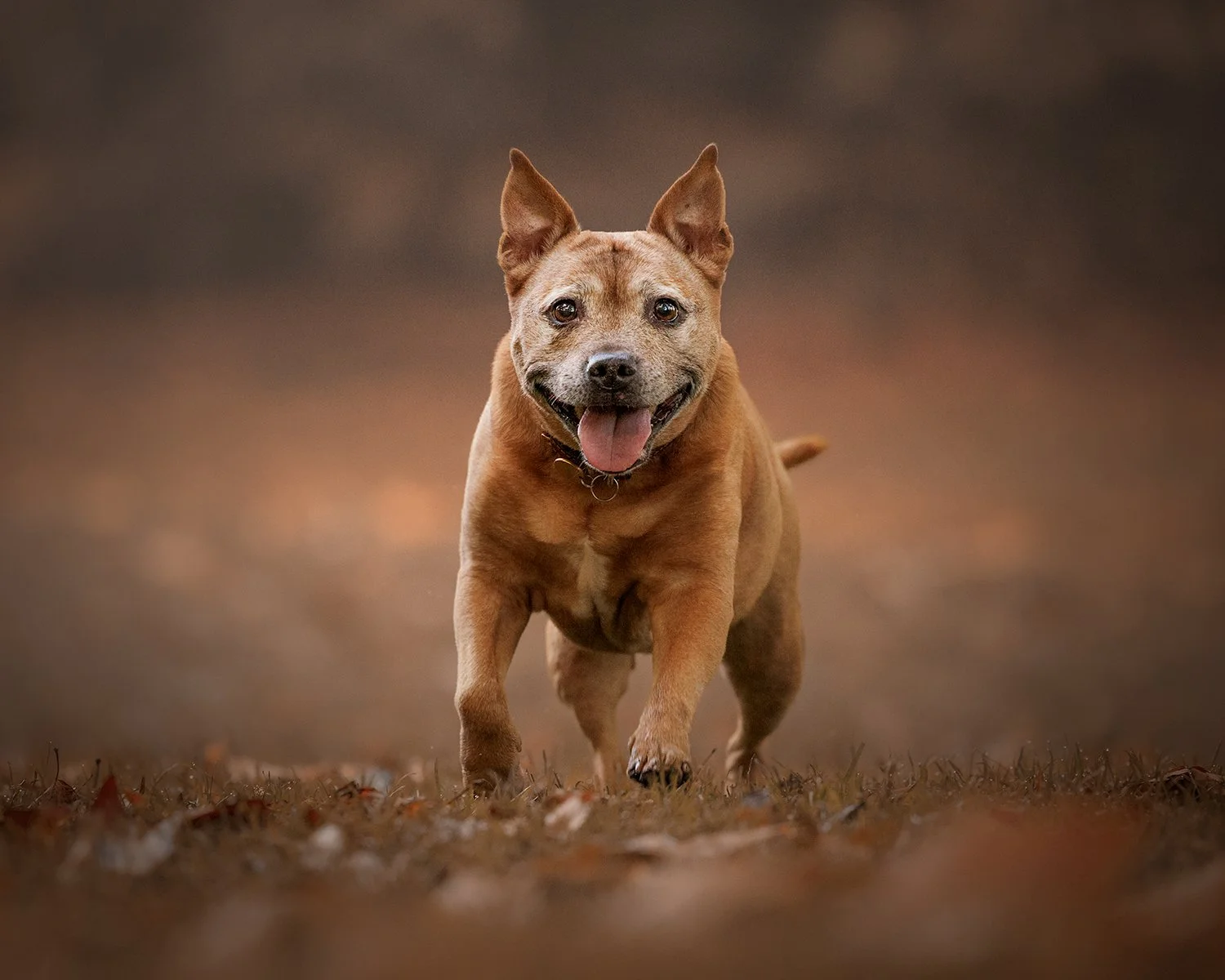
Movement isn't a problem. Movement is the point.
What about reactive or nervous dogs?
This is the question that matters most to me, because these are dogs I feel so strongly about creating a safe space for.
Rufus and Wilma are two schnauzers I photographed not long ago. Their guardian had been referred to me through a friend and, as she later shared, they'd been slightly nervous going in: the dogs were reactive, easily overwhelmed, and the session felt like it could go in any direction. She described the day beautifully: “photoshoot day was fun - the dogs were totally not prepared for the experience and got overly anxious and reactive. Amie was just superb - she was super calm and took control of the entire situation and got the dogs and us working the way she wanted.”
What she described as "taking control" wasn't about managing or correcting the dogs. It was about slowing everything down, reading what they needed, and rebuilding their confidence from a place of safety rather than expectation. The photographs from that session are, genuinely, some of the most expressive images I've made.
Valentine is a working cocker spaniel, rescued through Spaniel Rescue Foundation, who had a difficult start in life. Her human described her as “nervous and/or a bit manic with new people”, which is a combination I know well. The result? “Pictures capturing Vallie in motion in the woods, showing her boundless energy and her big personality.” Not despite her personality, but because of it.
I also photographed Tyler, a Norfolk terrier who, as his guardian put it, “as an excitable nearly 2 year old” had energy to match. He settled. The photos were wonderful. And a little dachshund, described to me as very nervous with new people and easily distracted, managed to look directly and confidently into my lens. His guardian was, I think, mildly astonished.

What looks like calm in a photograph is trust, built slowly and without pressure.
If you've been wondering whether a session might work for your dog, you're in the right place. If you're looking for a dog photographer in London,
you can learn more about my outdoor sessions here.
Nothing is ever forced
I want to be direct about this, because I think it matters enormously. Sessions are led by the dog. Full stop.
I am not going to manoeuvre your dog into a position they're not comfortable holding. I'm not going to keep trying for a shot at the expense of their well-being. If a dog shows me signs of stress or anxiety, I see them. I know what to look for, and I will always advocate for any dog I spend time with on a session. You will never look back at your photographs and see a dog who was pushed into something they weren't happy with. That isn't the kind of work I do, and it isn't the kind of memory I want to help you keep.
The sessions are for the dogs. They need to be as comfortable as physically possible. The humans get the extraordinary photographs afterwards, because nothing was ever asked of their dog that they weren't ready to give.
They simply got to be.
And if you feel embarrassed?
You shouldn't. But I also understand completely why you might.
There is something uniquely vulnerable about turning up somewhere with a dog who pulls on the lead, barks at other dogs, or bolts in the opposite direction the moment they catch a scent. It can feel as though your dog is somehow a reflection of something you've done wrong, or haven't done enough of, or ought to have sorted out by now.
I want you to know that feeling is not welcome at my sessions. You are not being assessed. Your dog is not being judged. I have photographed dogs in every state of organised chaos, and the ones who arrive with the most "problems" often leave me with the most memorable photographs, because their personalities are so vivid and so entirely, magnificently themselves. Together, we help them feel calm, and then they feel seen. Their images are often the ones that surprise their humans most, because they have tangiable proof of who they truly are.
Most of the dogs I photograph would fall into the category of "untrained" if you measured them against a commercial pet photography brief. That's not a concern. It's just Tuesday.
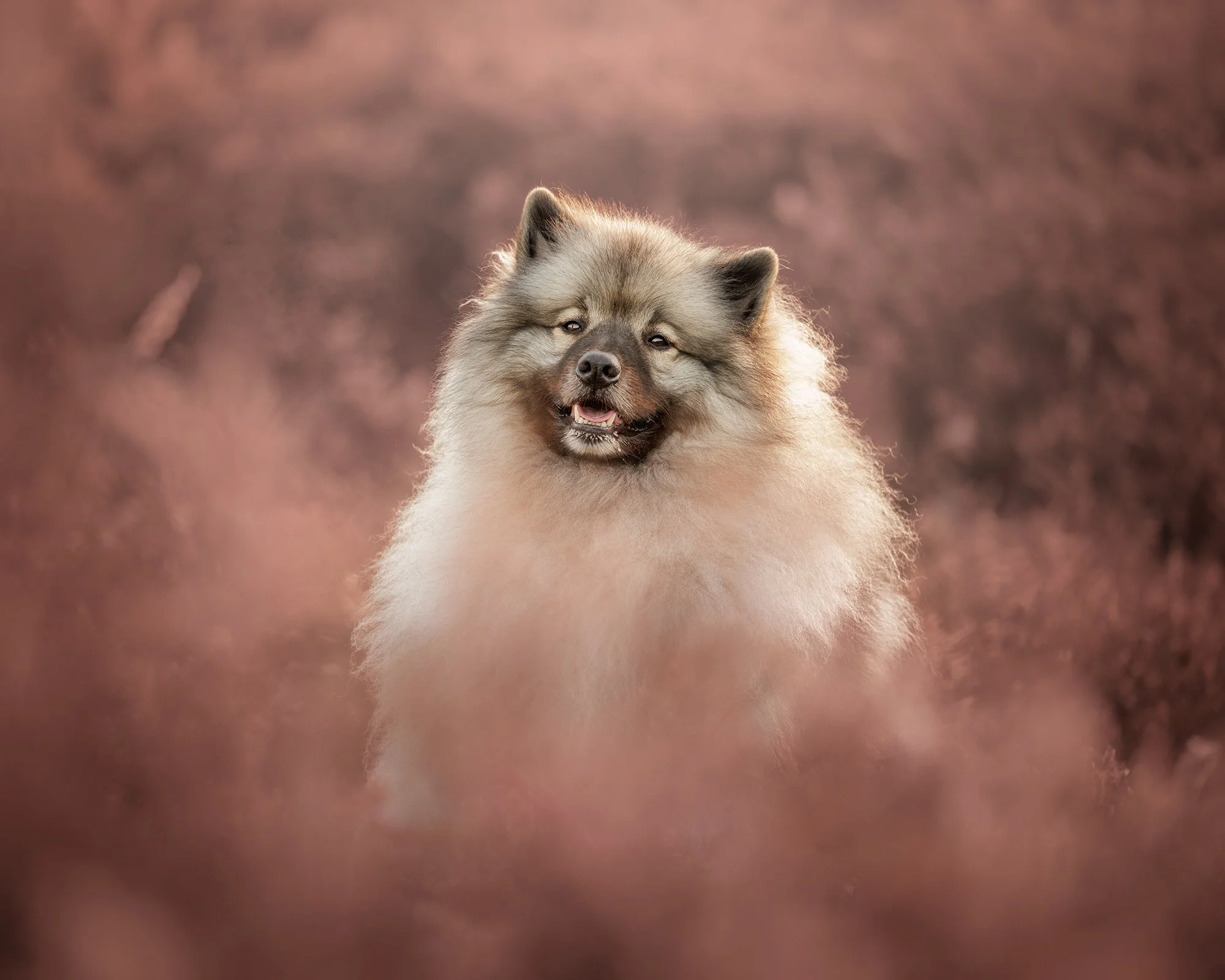
Every dog has a portrait waiting to be found. Sometimes it just takes a little patience, a lot of treats, and someone who already knows it's there.
Will it still be worth it?
Every single time, for every single dog, the answer has been yes.
I have never finished a session thinking, "That didn't work because the dog didn't behave." I'm not sure I'm capable of that thought, partly because I genuinely don't experience sessions as things that can go wrong in that way. When there are no rigid expectations placed on a dog, there's nothing to fail. There's just what happens, and what I find within it.
What I find, almost always, is something worth keeping forever.
The guardian of Valentine and her sister Dizzy - a spaniel who had, as described, been “treated like a princess since she was a puppy” and whose natural environment among trees and ferns made for images that were alert and regal - said something that has stayed with me: “we are in awe of what she has achieved with our dogs.”
That's the thing about working with real dogs, with all their quirks and energy and nerves and sheer unbridled enthusiasm for life. The results don't look polished in a way that erases the dog. They look true. And true, it turns out, is always more beautiful.
-
Not at all. Your dog can move, play, sniff, explore and just be themselves. Some of the best photographs happen in motion or in the little moments between “poses”.
-
No formal training is required. Sit and stay can be useful, but they are absolutely not essential, and reliable recall is not needed because your dog can remain safely on lead throughout the session.
-
Energetic dogs are very welcome. I can build movement, play and exploration into the session and work around their natural energy rather than expecting them to suddenly become calm and still for the camera.
-
Yes. Your dog can stay on lead throughout the entire session, and I can remove the lead afterwards during retouching if needed.
-
That’s completely normal. Sniffing and exploring can actually help dogs settle into a new environment and feel more comfortable. I don’t need your dog’s full attention for the whole session to create beautiful photographs.
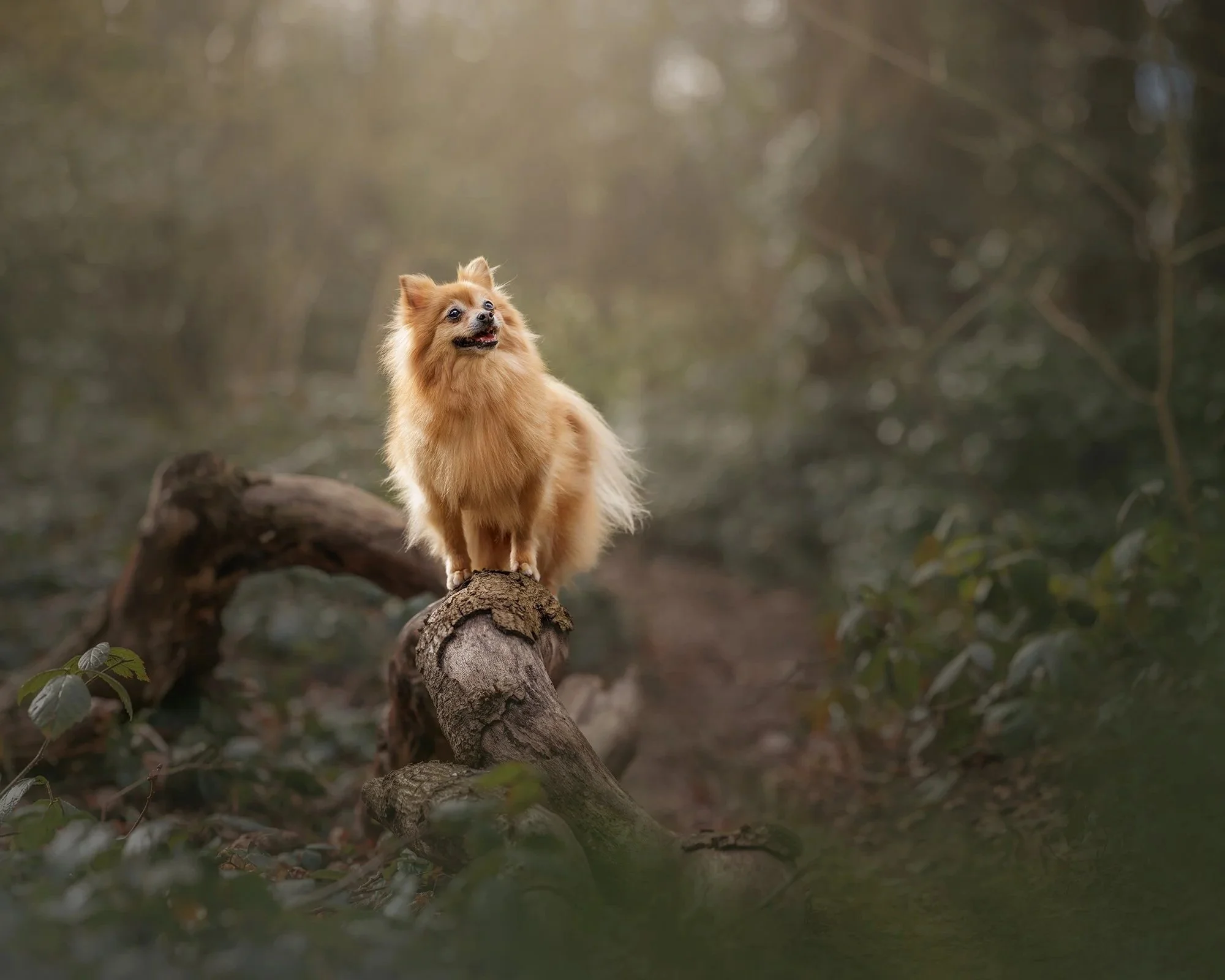
Ready to see what's possible?
Whether your dog is a whirlwind, a worrier, a puller, a bolter, or simply a dog who has never once sat still on purpose, your portrait is waiting. Head to my portrait page to find out more about how sessions work, and to get in touch about making something beautiful together. Your dog doesn't need to be perfect. They just need to be yours.