
People often tell me that black dogs are difficult to photograph. Sometimes it's something they've heard; sometimes it's a conclusion they've reached after looking through their own camera roll and wondering why they see a lovely environment containing a little black blob.
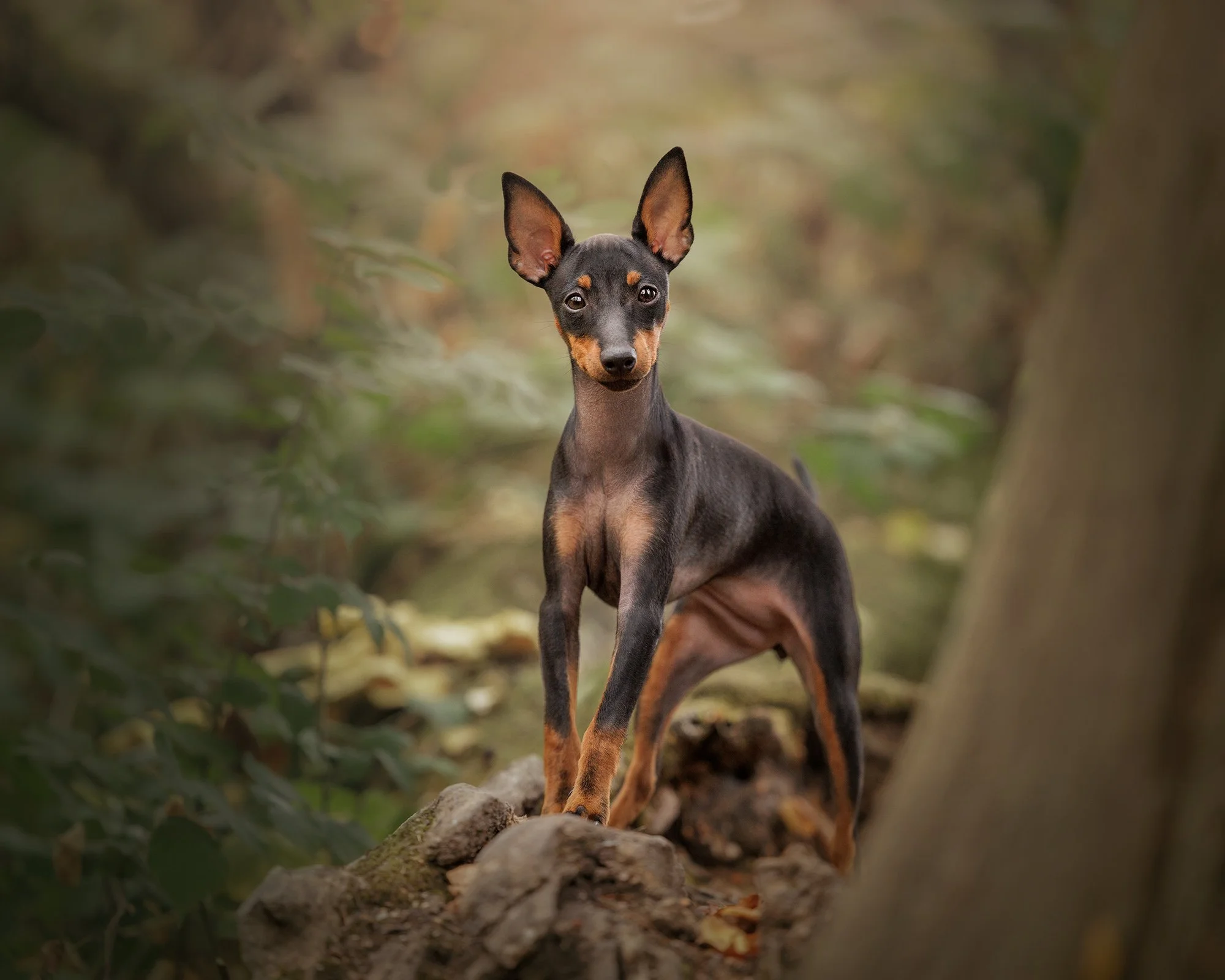
I always find this funny because black dogs are the ones I learned photography with. Theo, my miniature pinscher, was my first little muse as a puppy. I taught myself by photographing her, so working with a dark coat has always been quite easy to me.
Now I have Theo and Troian, and I have photographed many other black dogs, too. Outdoors, in the studio, even against black backdrops where you can still see the detail in their coats. I've never found their colour a problem. I love photographing them.
So if you've been wondering whether your black dog or cat will photograph well, the answer is yes. The photographs on your phone don't limit what is possible.

Why your phone photograph might not look like your pet
If you've taken a photograph where the surroundings look lovely but your dog has become a dark shape in the middle, I understand why you might assume their coat is the problem.
A camera doesn't interpret a scene in quite the same way we do. Depending on the lighting and what else is in the frame, a phone's automatic adjustments may make a dark face look much less detailed than it appears to you in person. Sometimes you can see the background perfectly, but barely make out the expression you were trying to photograph.
That doesn't mean your pet is unphotogenic. It means that particular photograph hasn't shown them very well due to the technology you’re using.
When I'm photographing them, I'm looking at the animal, the light and the surroundings together. That's part of photographing any pet.
You don't need to solve the photography before coming to a photography session. Tell me what you love about your pet and what you'd like to capture. The rest is my job.
There is more colour in a black coat than you might think
One of the things I love about photographing black dogs is finding those little pockets of colour within their fur. Good light can reveal deep reds and browns that you might not notice in a quick photograph.
Theo has a few little golden flecks in her otherwise black chest. I love details like that. They're part of her actual coat, and part of what makes a photograph feel like her to me, and a little detail about her I’ll always get to look back at and remember.
Of course, that doesn't mean every black dog has the same warm tones or markings. It means there can be much more to see than one flat area of black. The direction of the fur, its texture and the way it catches the light all help describe the animal in front of us.
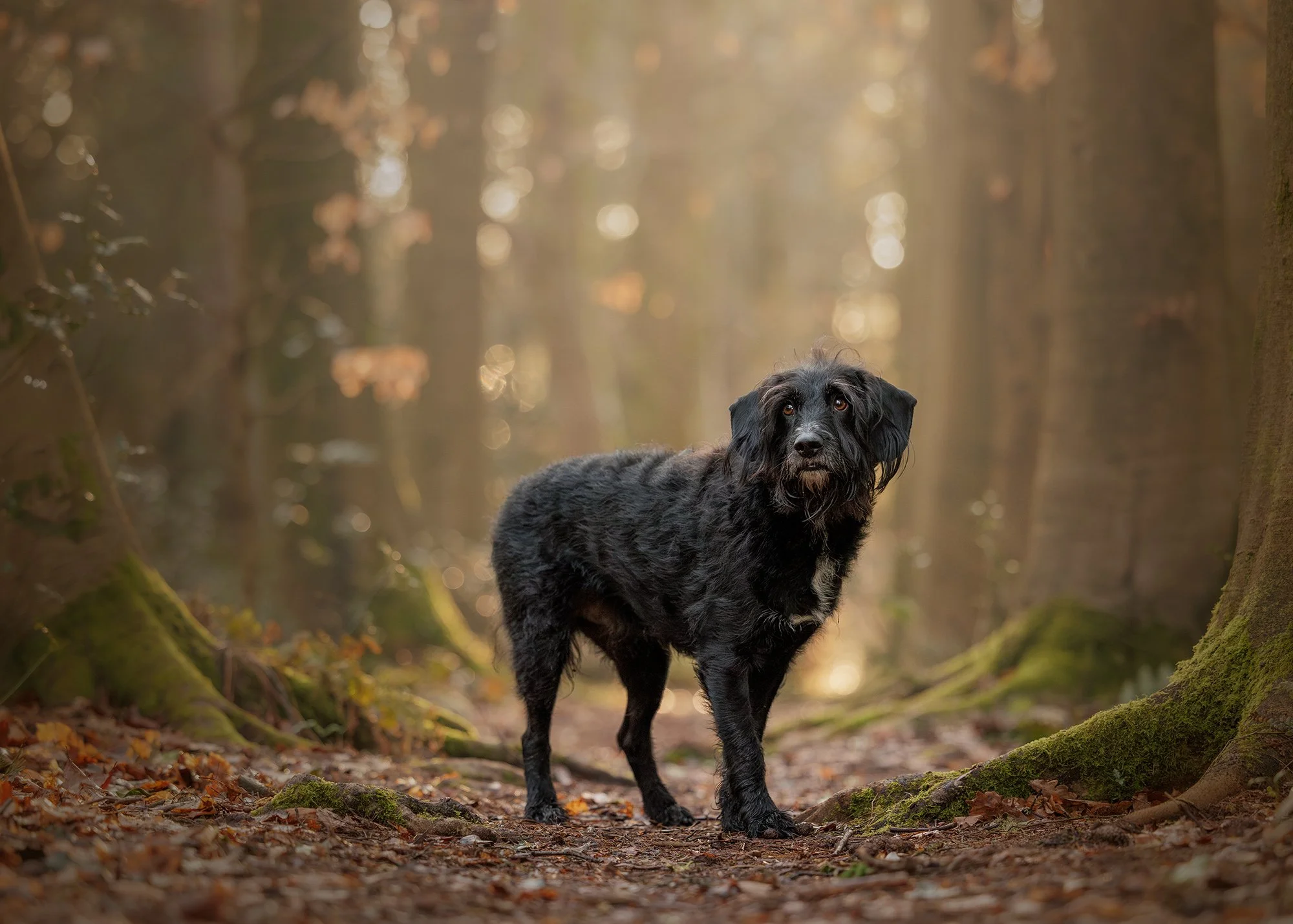
Their little markings and variations belong in the photograph too. Tell me which details you love.
Black should still look black
One thing I am careful about in retouching is keeping black coats from becoming washed out and grey. Showing detail doesn't mean making the whole animal as bright as possible.
I want you to be able to see the texture of their fur and the shape of their face while keeping the richness of their coat. If your dog is black, they should still look black in their photographs.
In retouching, I preserve the colours and markings that make your pet recognisable. Editing is part of finishing the photograph, with their individual appearance at its centre.
That includes taking account of what is actually there. Warm tones, white markings, grey hairs and little golden flecks aren't interchangeable. The finished image should reflect your animal's coat, rather than an idea of what every black pet ought to look like.
You don't need blazing sunshine
It might seem logical that a dark coat needs lots of direct sunlight to show up properly. But bright sunshine isn't automatically the best light for a portrait, whatever colour the dog happens to be.
Harsh light can leave very bright reflections alongside deep shadows. Soft light can be beautiful for showing a face and the detail in a coat without that strong contrast. A cloudy day certainly doesn't rule out lovely photographs of a black dog.
This is already part of how I work outdoors. I look for light that suits the photograph, rather than assuming the brightest part of the day must be the best time to meet.
I've written more about that in my autumn dog photography article, including why sunshine isn't a requirement for an outdoor session. Your black dog doesn't need you to wait for a cloudless summer afternoon either.

A black dog on a black backdrop? Absolutely.
I have photographed black dogs against black backdrops with their details still visible. So you don't have to choose a pale background simply because your pet has dark fur.
What matters is how the animal and surroundings work together. Light can reveal the shape of a dark coat, and colour and depth can help distinguish a pet from what is behind them. The background doesn't have to be white to do that job.
Outdoors, there are all sorts of possibilities within woodland, parks and urban surroundings. In the studio, a darker backdrop can be a lovely choice too. I have photographs of black dogs in both settings, and neither needs to be treated as the only correct option.
We can choose the experience around your pet and the kind of photographs you enjoy. Their coat colour doesn't make that decision for us.
And what about black cats?
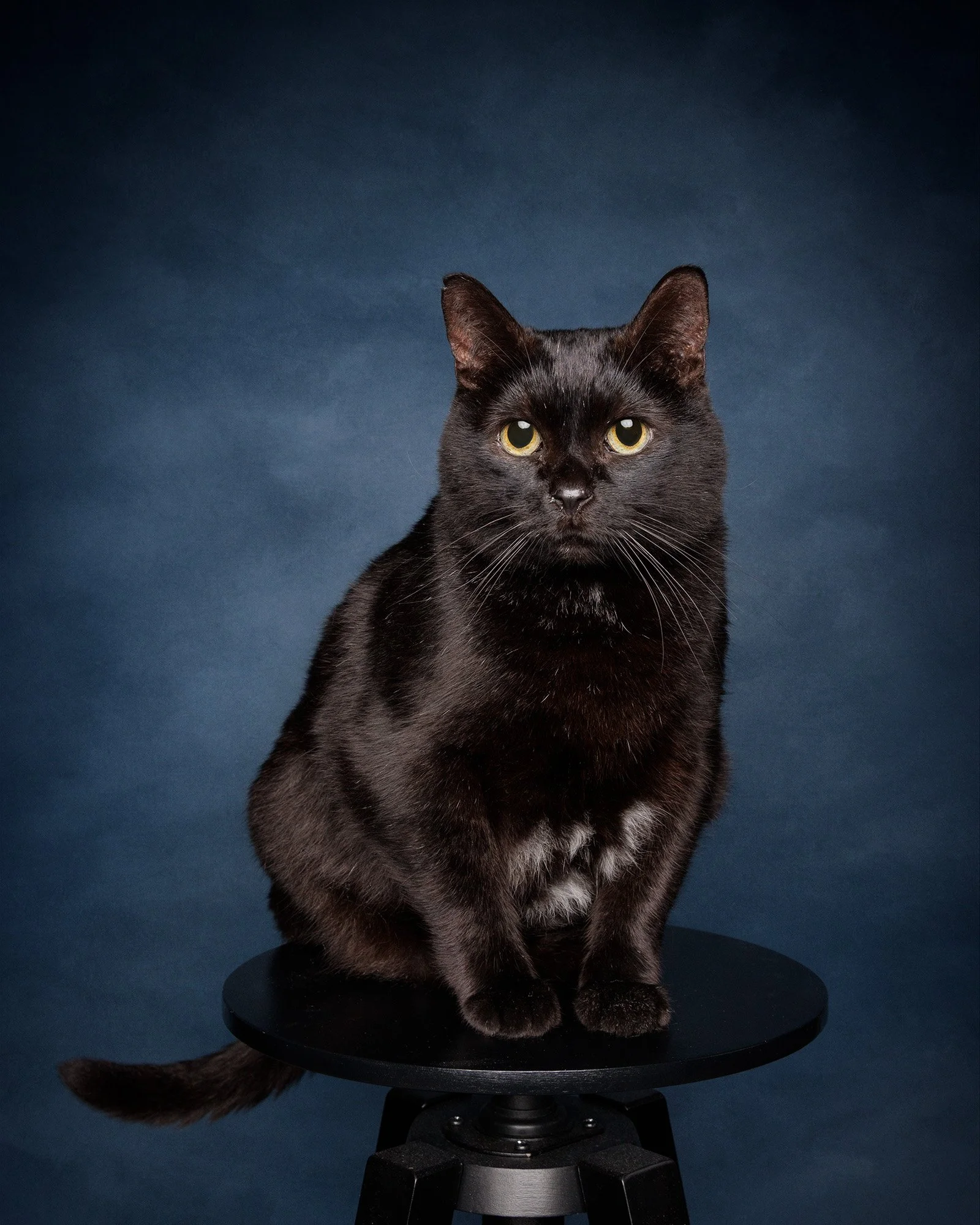
The first cat I photographed in the studio was black. His name was Barkley, which I found fitting given that I spend most of my time photographing dogs.
Barkley liked being up high, so a stool and a textured blue backdrop became part of his session. We gave him room to explore and worked with what interested him. His coat colour wasn't what required me to think differently. Learning how he wanted to interact was.
His portrait is a lovely example of a black cat looking very much like himself, with his face and coat clearly part of the picture.
The individual cat's comfort matters throughout. A backdrop choice doesn't take priority over how they feel about the space, and getting a photograph doesn't mean insisting they stay somewhere they don't want to be.
You can meet Barkley and read more about my approach in Cat Photography in London: Portraits with Personality.
Looking beyond coat colour
There is a reason to challenge assumptions about black pets beyond what ends up in our camera rolls. Cats Protection launched National Black Cat Day in 2011, when its figures showed that black and black-and-white cats took an average of seven days longer to find homes than cats of other colours.
I wouldn't want the idea that black pets are difficult to photograph to become another reason to overlook them. Their colour tells you nothing about whether they'll love exploring, want to stay close to you, or have strong opinions about my treat selection. There is a whole individual to get to know.
Seeing their expression
Being able to recognise their expression matters as much as seeing the texture of their fur. A technically detailed photograph isn't the whole goal. You want to see your pet in it.
Light reflected in an eye can make it easier to see, and the way light reaches the face matters too. But eyes should still look like their eyes. They don't need to be turned into something unnaturally bright simply because the fur around them is dark.
There will be different expressions and different kinds of photographs within a session. Your pet doesn't have to look directly down the lens in every frame. The way they look towards you or notice something nearby can be just as recognisable.
They don't need a trained stay
If you're also worried about your dog's ability to sit still, they don't need a trained stay. We can work with movement, exploration and the support of a lead, depending on the dog and the photograph. My No Training? No Problem guide explains more.
A photograph that looks like the pet you know
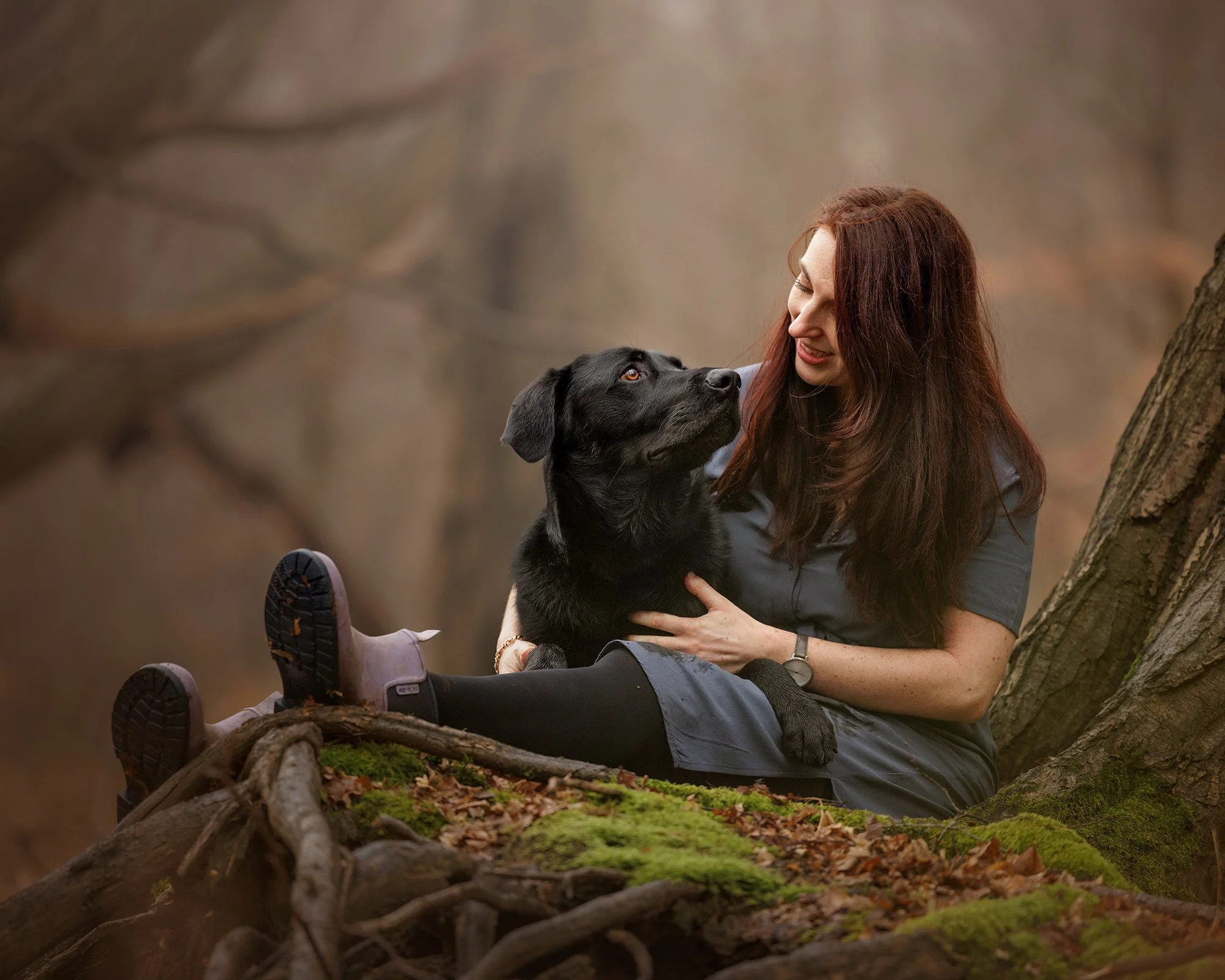
I love black dogs. Photographing Theo is where all of this started for me, and I still enjoy seeing the detail, colour and expression that a dark coat can hold.
A black coat is part of what makes your pet look like themselves. I want their photographs to show that: the richness of the fur, the little variations within it, and the face you know so well.
If your camera roll isn't doing your black dog or cat justice, you don't have to assume that's how photographs of them will always look. You can explore my Outdoor Sessions across London and Surrey, private Studio Sessions in Wimbledon, or get in touch to talk about your pet and the photographs you'd love to have.
Black pet photography: Your Questions Answered
-
They haven't been in my experience. I learned photography with my own dark-coated dog, Theo, and have photographed many black dogs outdoors and in the studio. Light, surroundings, and careful editing help show their features while keeping their coat rich and dark.
-
Yes. Barkley, the first cat I photographed in the studio, was black. His portrait is one example of how a dark coat can retain its detail and character in a photograph.
-
No. Soft light can work beautifully for dark coats. Strong direct sunlight isn't a requirement and can introduce harsh shadows and bright reflections.
-
No. I've photographed black dogs against black backdrops with their details visible. The light and the relationship between the pet and background matter more than choosing a pale colour.
-
I aim to preserve the richness of their coat while showing texture and expression. I'm careful to avoid washing black fur out into grey.