
Dog Recall Training in London: Why It's Harder Here (And How to Actually Build It)
With Diane Kasperowicz of Super Hounds Dog Training | Recall training London | Puppy training Tooting
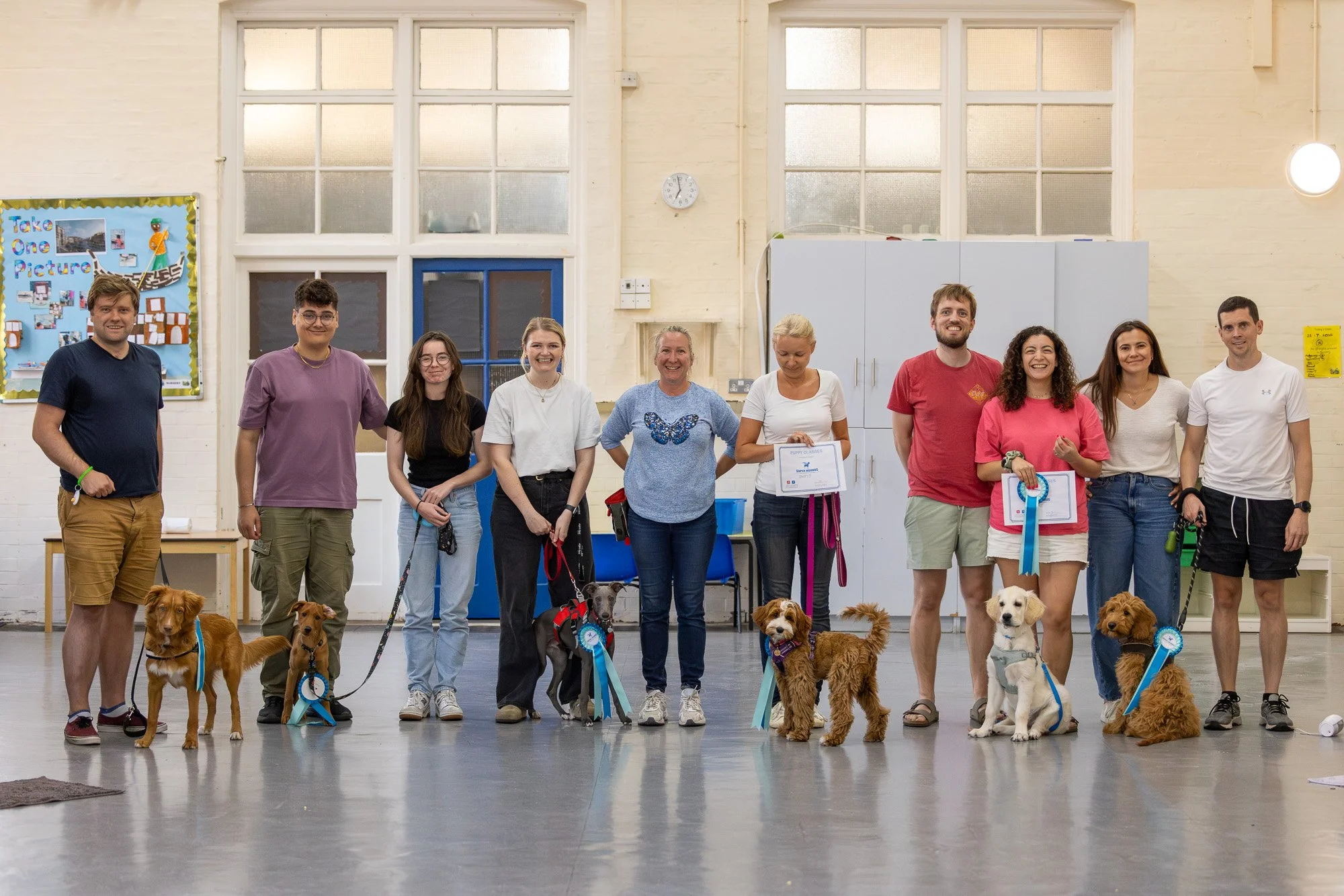
Once a month, I pack up my camera and head to Tooting for what I have started calling my regular dose of puppy dopamine. I photograph Diane Kasperowicz's puppy classes at Super Hounds, and without question, my favourite part of every session is recall work.
There is something about the moment a puppy hears their name, turns, and properly commits to running back towards their person full pelt that I find endlessly satisfying to photograph. Ears flying, legs not quite coordinated yet, full-body joy. It is one of the few moments in a session when I genuinely cannot predict what I will get, and that unpredictability is exactly what makes it wonderful. I also love the recall section because until that point, I have tried to be as invisible to the pups as possible to not distract them from their school work, so photographing them during recall sees me lying on the floor, and more often than not, being clambered all over and licked by the puppies.
Recall is also one of the skills owners struggle with most. So I asked Diane directly: What are the most important things owners can do to set their dogs up for a genuinely reliable recall? Her answer forms the backbone of this blog, and I have added some practical exercises around her points to help turn the why into a workable how.
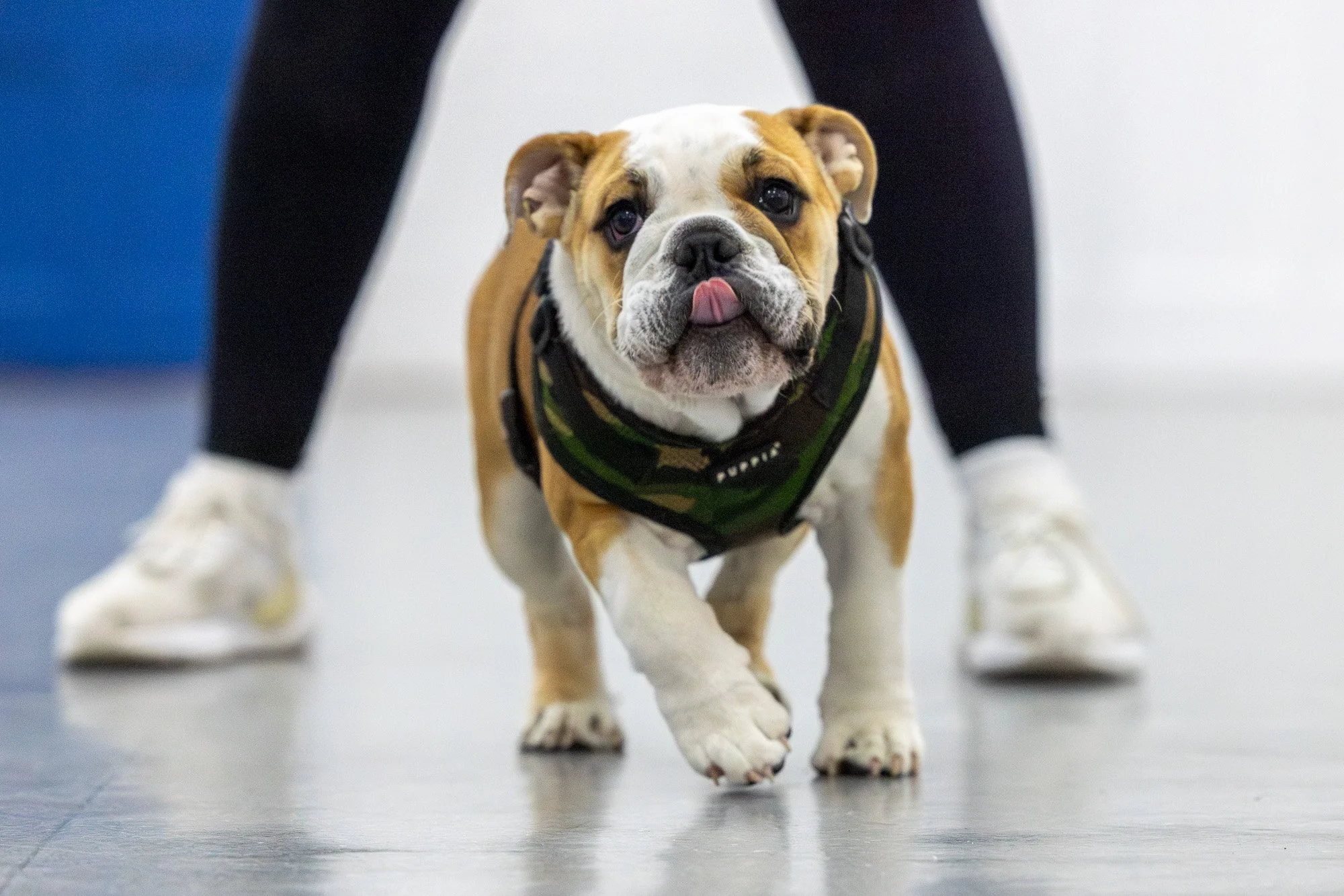
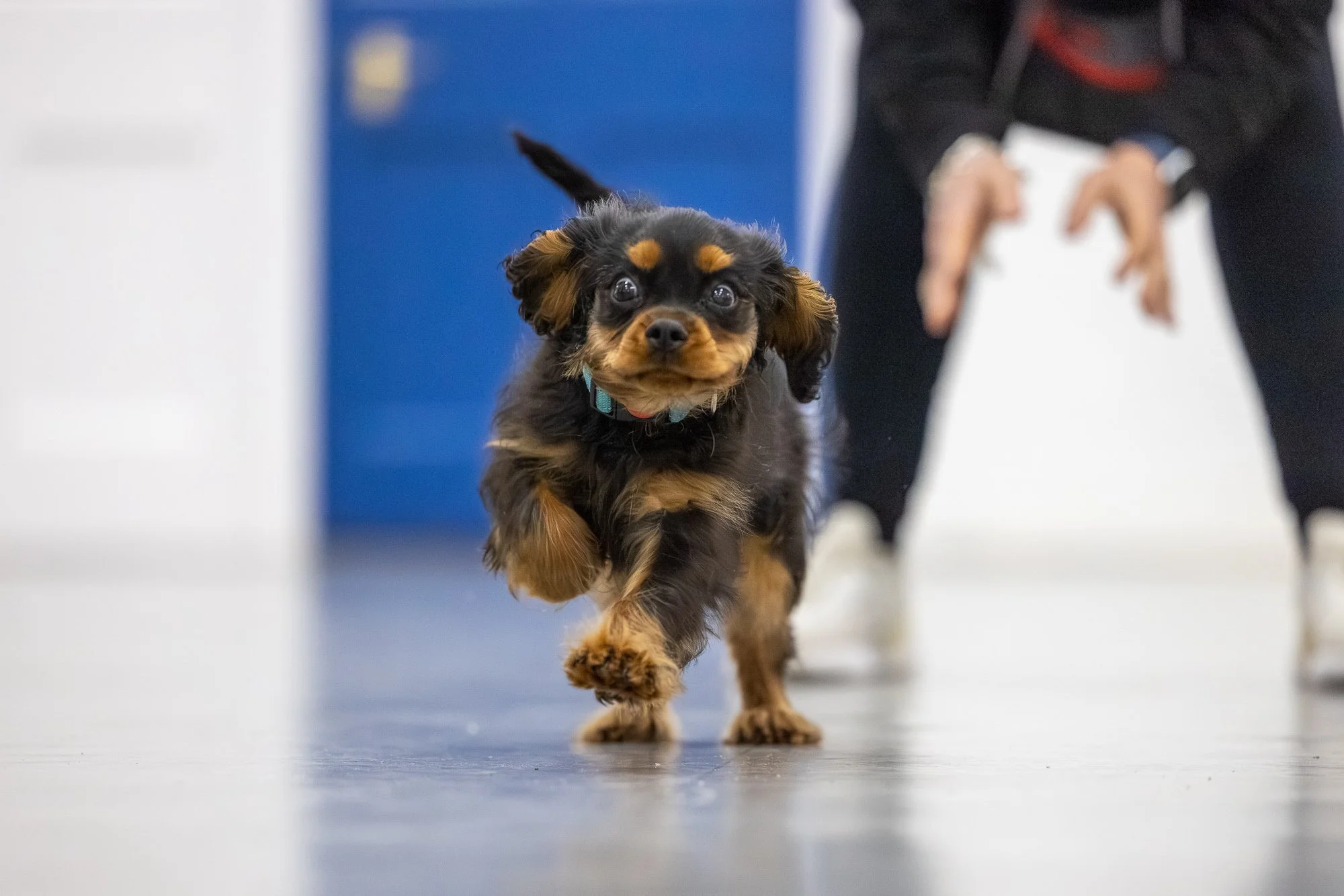
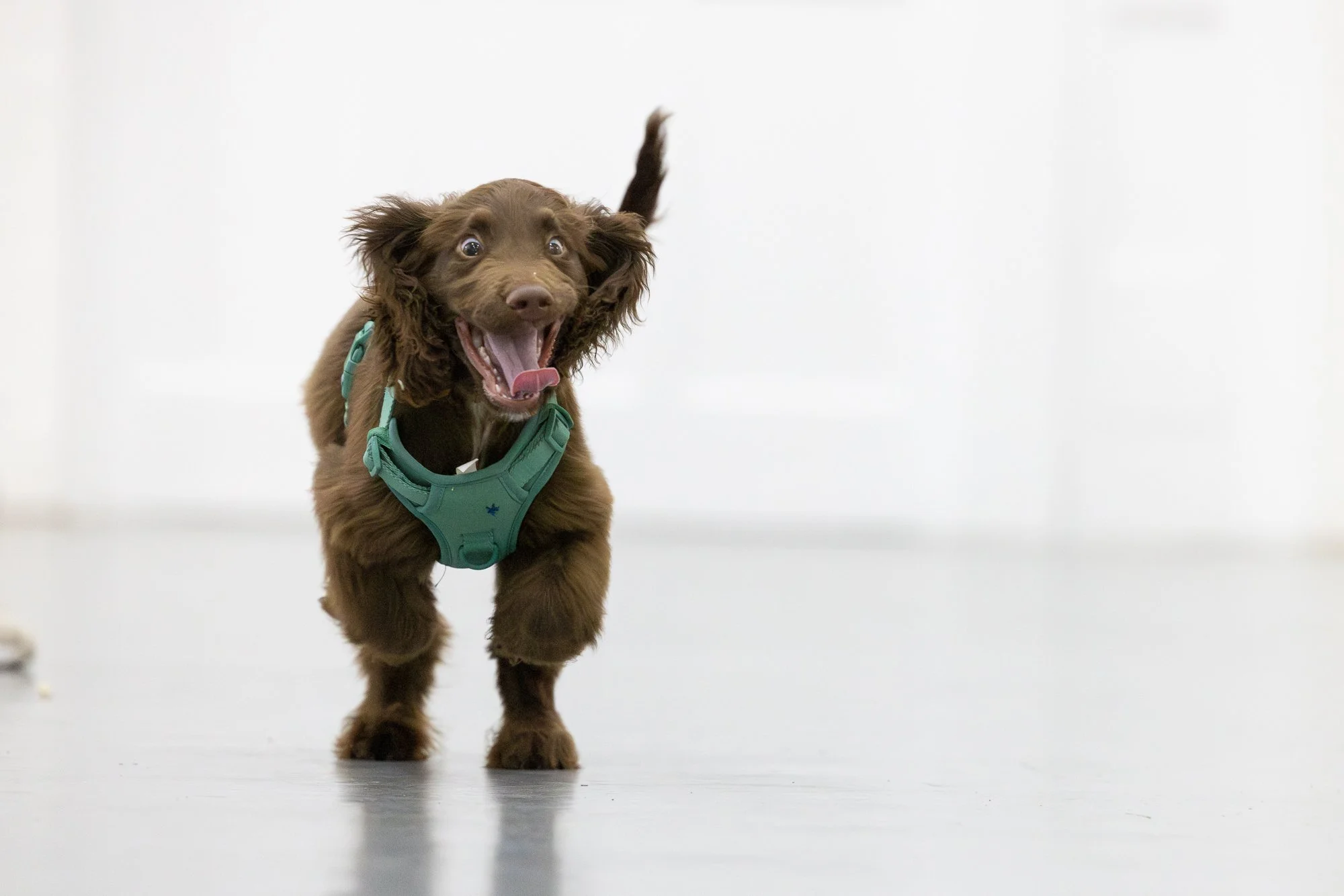
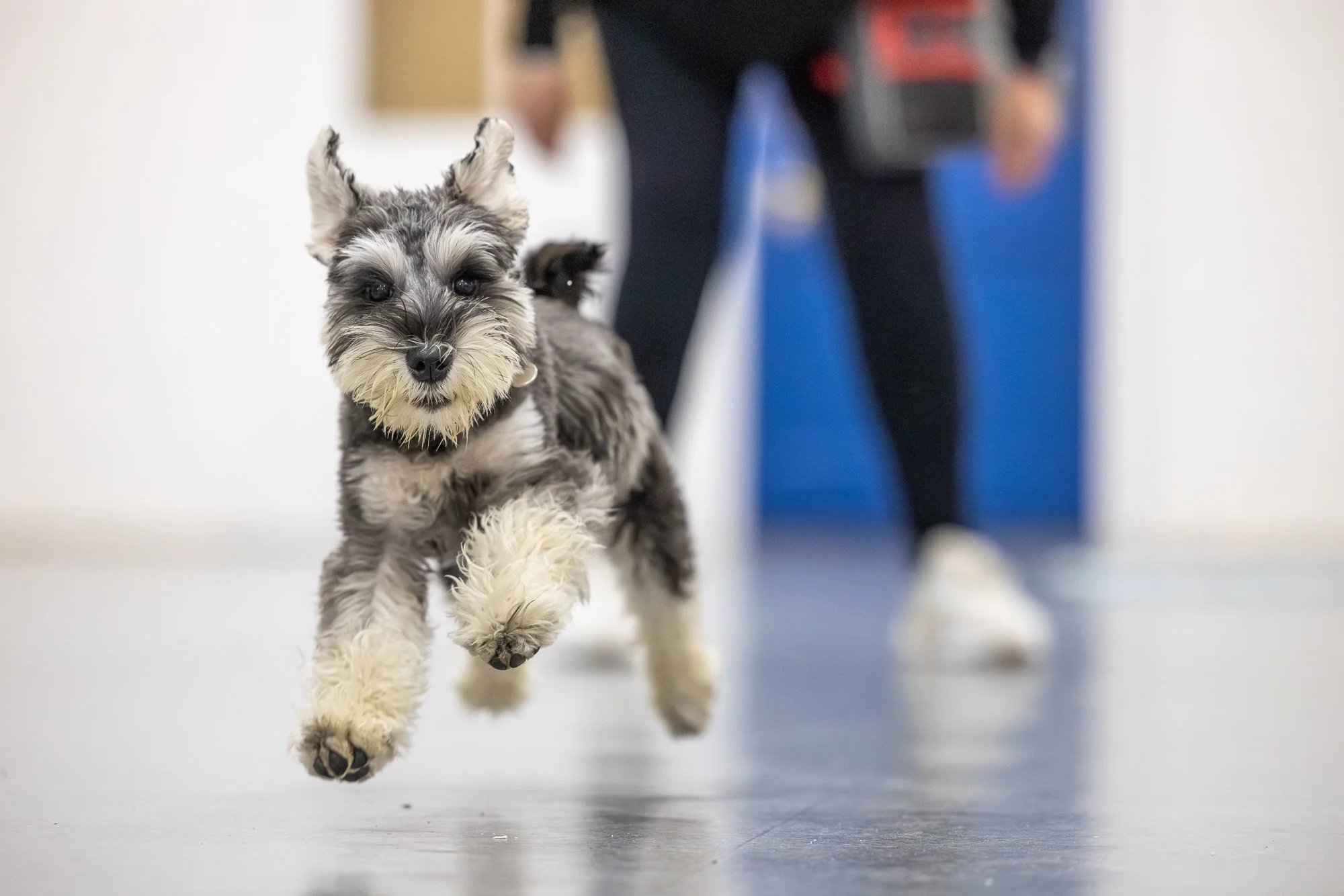
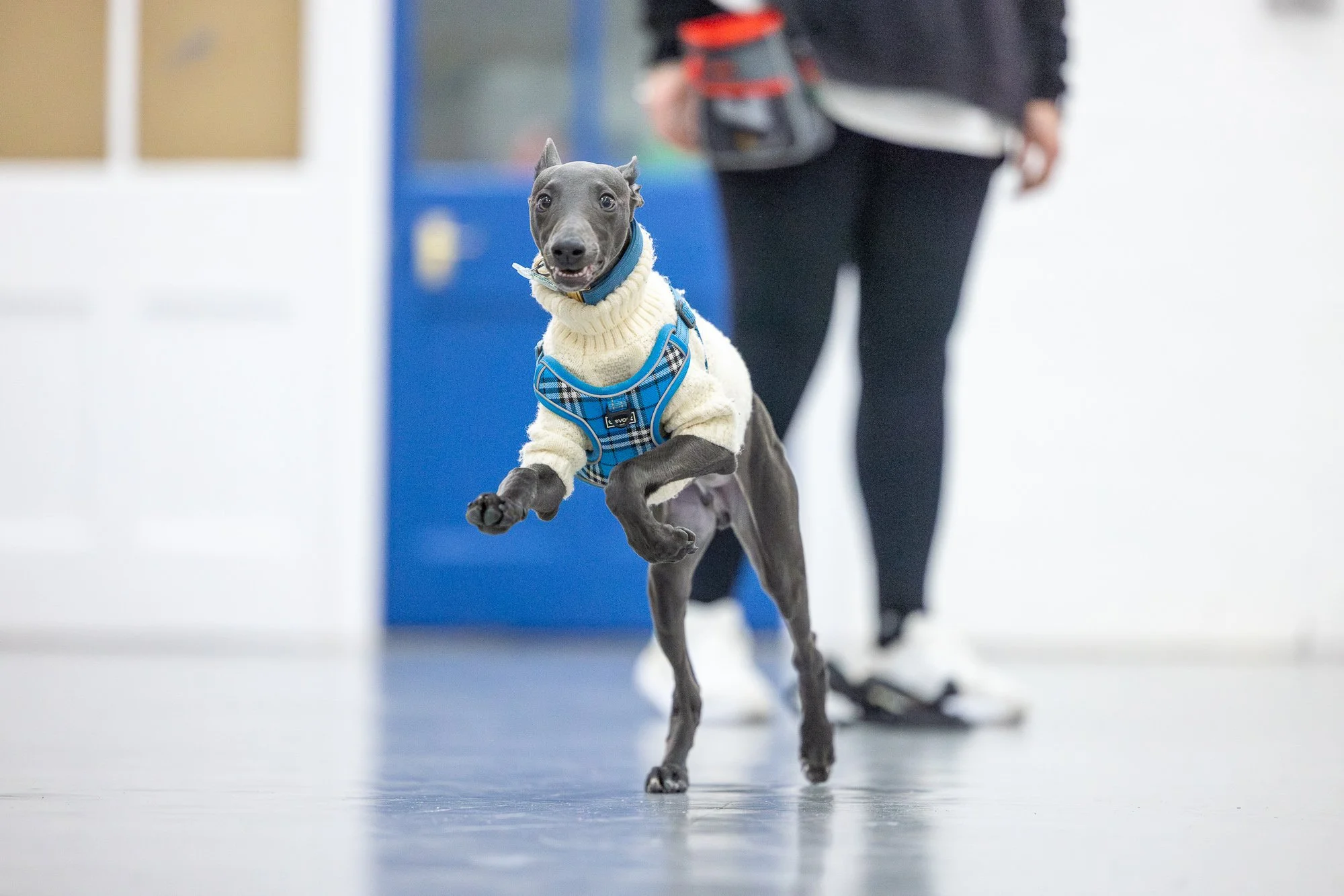
These moments, captured at some of Diane's puppy classes in Tooting, is exactly why the recall work is my favourite thing to photograph.
Why recall is harder than it looks
Reliable recall is one of the most important skills a dog will ever learn. It keeps them safe, gives them genuine freedom off the lead, and makes walks considerably more enjoyable for everyone involved. It is also, if you are walking your dog anywhere in London, being tested constantly against a level of distraction that most training advice does not really account for.
A quiet recall exercise in a back garden is one thing. A recall exercise on Clapham Common on a Saturday afternoon, competing against an abandoned picnic, three squirrels, someone's discarded chips, and another dog mid-zoomies, is an entirely different challenge. London's parks and commons are dense with exactly the kind of high-value distractions that make recall fall apart - and that is before you factor in the sheer number of other dogs most London dogs encounter on a single walk, each one a potential social distraction of their own.
This is precisely why so many owners assume their dog simply does not "do" recall, when in reality the dog has never been given the chance to build the skill in layers, starting somewhere genuinely easy and working up to exactly this kind of environment. Recall is not something a dog should simply know. It is a trained behaviour, built carefully and reinforced consistently over time, particularly in a city that throws this many temptations into a single hour of dog walking.
Diane sees this constantly in her work.
“All too often, I see owners expecting recall to just happen, without putting in the foundational work first. A reliable recall is a skill, built layer by layer, just like any other behaviour we want our dogs to perform confidently.” - Diane
Here are the three things Diane says make the biggest difference, along with some practical ways to put each one into action.
1. Make sure your dog actually understands their recall word
This sounds obvious, but a surprising number of dogs do not truly understand what their recall cue means, because owners often start using words like "come" or "here" immediately in busy, exciting environments before the dog has had any chance to learn what the cue predicts.
“Your recall word should mean one thing to your dog: turn towards me immediately, because something brilliant is about to happen. That association has to be built somewhere quiet first, not tested in a park full of squirrels.”
The easiest way to build this is to start at home, where distractions are minimal, and your dog can succeed easily. Say your recall cue once, in a happy, upbeat tone, and the moment your dog moves towards you, reward generously. This stage is about building understanding and a strong positive association, not testing reliability.
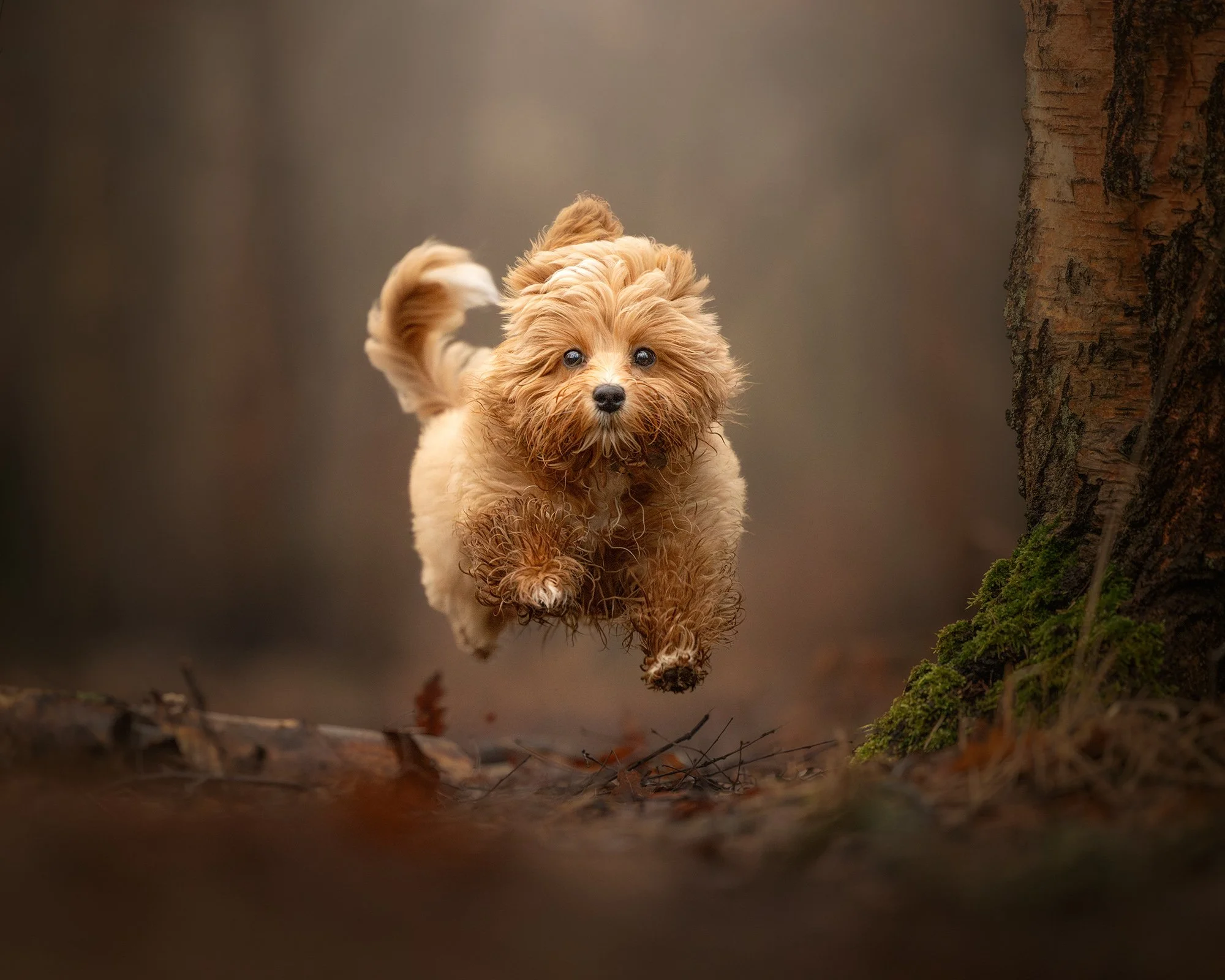
How to build this in practice:
Start in the house or garden. Say the cue once in an upbeat tone, then reward immediately when your dog turns or moves towards you - even a single step counts at first.
Once that is reliable, move to a quiet outdoor space with minimal distractions, such as an empty corner of a park early in the morning.
Introduce a long line before moving to genuinely distracting environments, so your dog never has the chance to practise ignoring you off lead.
Only progress to busier, more distracting environments once each previous stage is consistently solid. Recall training is layered and progressive, not something you jump straight into at full difficulty.
2. Make coming back to you genuinely worth it
Dogs repeat behaviours that are rewarding. If returning to you consistently predicts something wonderful, recall becomes far more powerful - and far more reliable when it actually matters.
“Understanding what your dog finds motivating is everything here. For some dogs that is proper food, not dry biscuits from the bottom of a pocket, but something genuinely exciting like chicken or cheese. For others it is a toy, a game of tug, or simply enthusiastic praise and affection. The reward needs to be matched to both the dog and the environment you are recalling them from.”
If you are recalling your dog away from another dog, an exciting scent trail, or a squirrel mid-chase, your reward needs to genuinely compete with those. A stale treat is unlikely to win against a particularly excellent smell.
One of the most useful mindset shifts here is realising that recall should feel rewarding rather than restrictive. Too many dogs learn, through repetition, that being recalled means the lead goes straight back on and the walk is effectively over. If that is the pattern, it is no wonder some dogs are reluctant to come back.
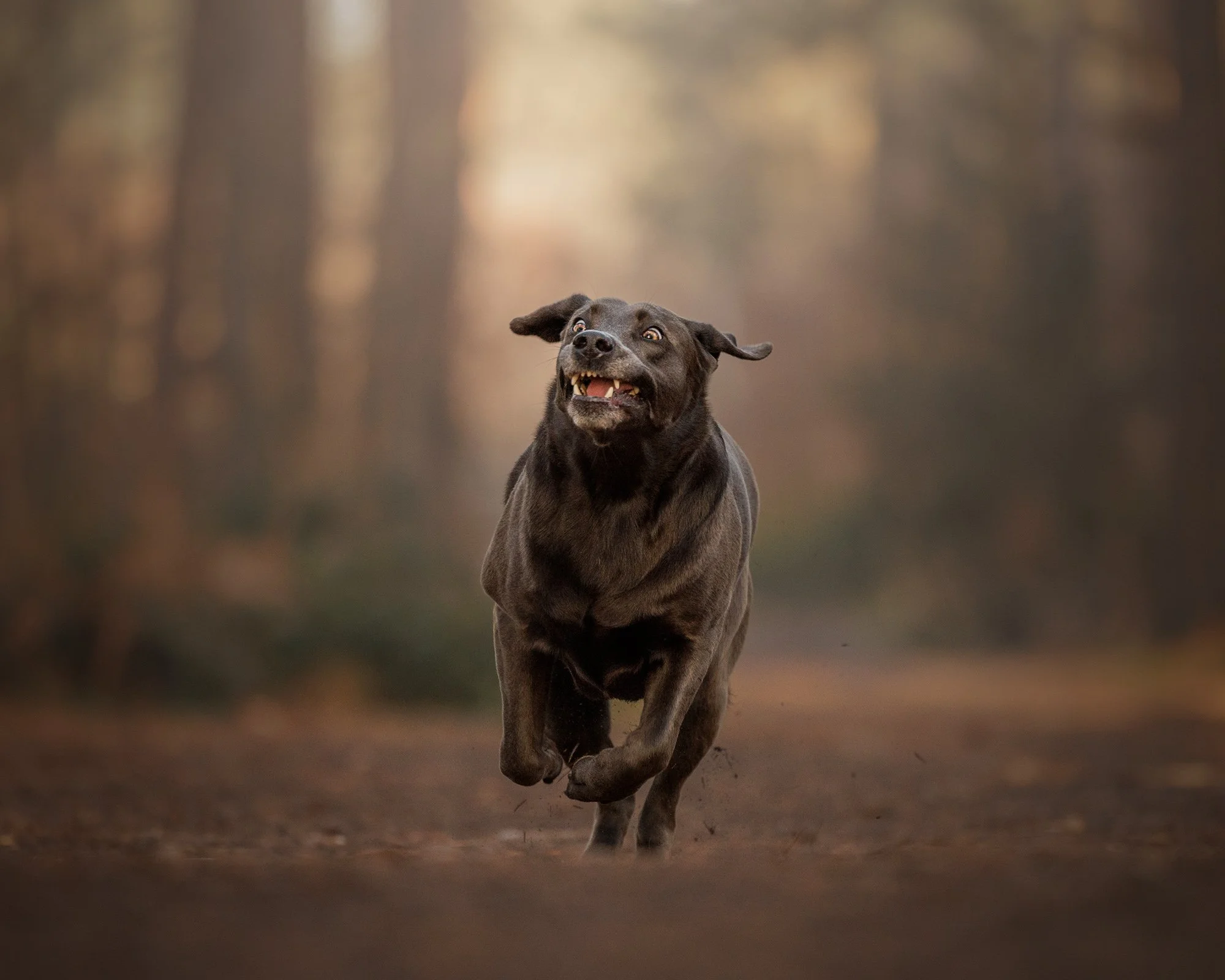
How to build this in practice:
Reward generously and then release your dog to keep exploring, rather than ending the fun every single time they come back. This breaks the "recall equals the end" association.
If your dog has a particular high-value activity they love - sniffing, chasing, playing with another dog - you can use that activity itself as part of the reward. Calling them back, rewarding briefly, and then letting them return to what they were doing teaches them that recall does not interrupt their fun, it is simply a brief, pleasant pause within it.
Vary your rewards. A dog who never knows whether recall might lead to chicken, a game, or genuine excitement from you stays more engaged than one who has come to expect the same predictable treat every time.
Practise recalling your dog and then sending them back to what they were doing, multiple times on an ordinary walk, not just when you actually need them to come. This keeps the cue meaningful rather than only ever associated with the walk ending.
If you're looking for a dog photographer in London who genuinely enjoys the chaos of puppy class as much as the finished fine art portraits, you can learn more about my sessions here.
3. Don't nag your dog
One of the quickest ways to weaken a recall cue is repeating it over and over again. "Come... come... COME... Daisy, come... Daisy, COME!" Very quickly, a dog learns that the first few repetitions of the word simply do not matter, because nothing happens until the fifth or sixth attempt anyway.
“Your recall word should carry real value and meaning, so use it carefully and intentionally. Say it once, and then help your dog succeed rather than repeating yourself and hoping. If a dog is genuinely unlikely to come back in a given moment, that is a sign to manage the situation, not to keep calling.”
This is also where management becomes genuinely useful. If your dog is not yet reliable enough to be trusted off lead in a given environment, a long line allows them freedom to explore while preventing them from rehearsing the habit of ignoring you. Every time a dog successfully ignores a recall cue without consequence, that cue gets a little weaker.
It is also worth not overusing your recall cue unnecessarily. Constantly calling your dog every thirty seconds, even just to check in, can lead to them becoming bored of the cue or simply tuning it out altogether.
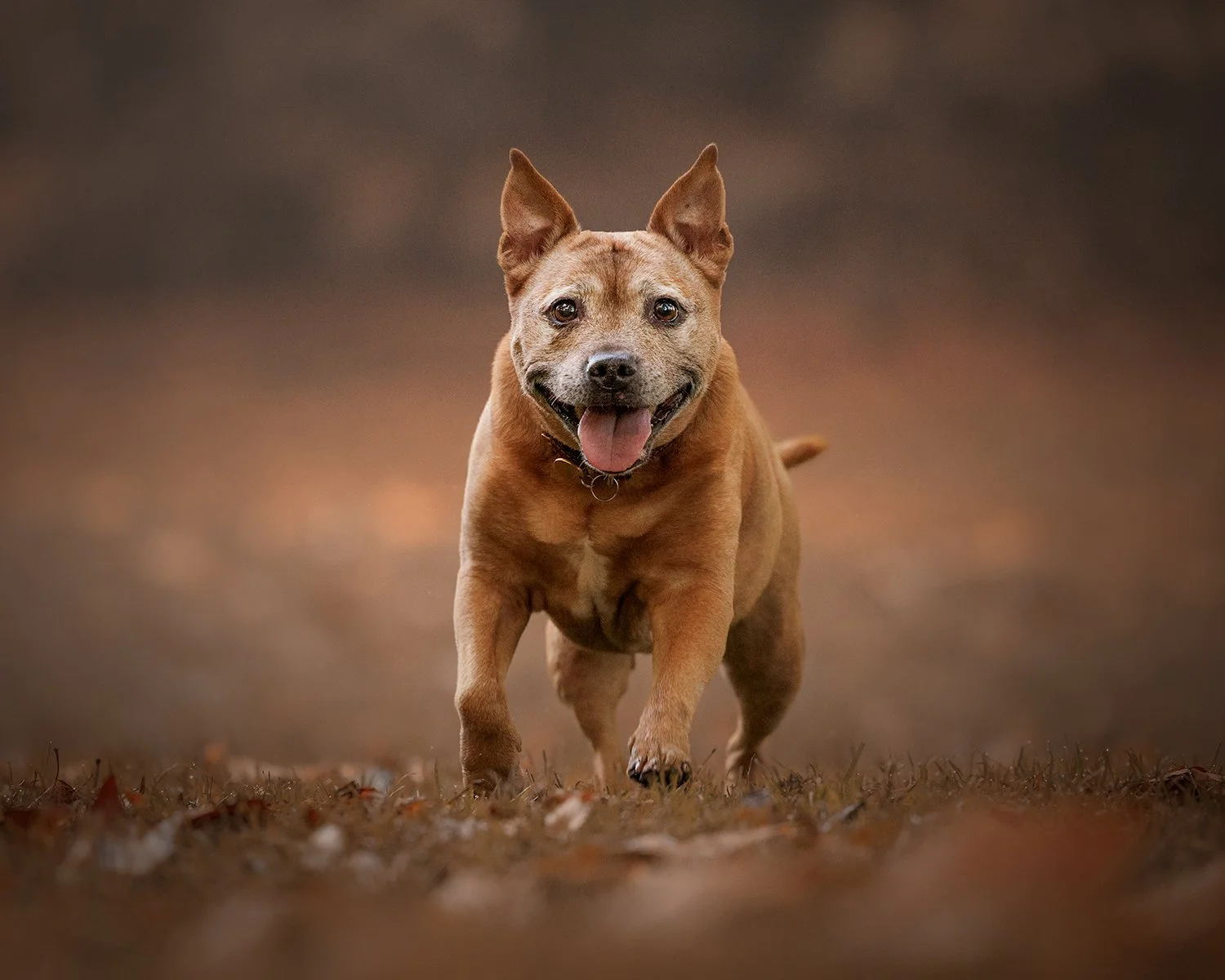
How to build this in practice:
Say the cue once. If your dog does not respond, move closer, make an exciting noise, or use a long line to guide the outcome - rather than repeating the word.
Use a long line in any environment where you are not confident your dog will succeed. This protects the cue from being rehearsed as optional.
Reserve your recall cue for moments where you actually want your dog back, rather than using it constantly throughout a walk. Let them explore freely in between, and call with purpose.
If you notice your dog beginning to ignore the cue in certain environments, that is valuable information. It usually means you have progressed the difficulty too quickly, and it is worth returning to an easier stage for a while to rebuild value.
Why this matters beyond the walk
I see the practical value of good recall constantly in my own work, even though most of my sessions involve dogs who are on lead for the majority of the actual photographs being taken. Action shots are where recall really earns its place - the brief windows where a dog is off lead (or on a long line) genuinely moving, genuinely themselves, and where having a reliable way to bring them back safely makes the whole thing possible in the first place.
But recall is not really about photography, or even about convenience. It is about safety, and trust, and giving a dog the kind of freedom that only comes when you know, with real confidence, that they will come back to you. That is worth building properly, slowly, and without shortcuts.
“A reliable recall is not built through shouting louder or repeating cues endlessly. It is built through clarity, reinforcement, consistency, and gradual progression. And remember, recall is not something you ever fully "finish." Even well-trained dogs benefit from regular reinforcement throughout their lives.” - Diane
Diane Kasperowicz
Dog Trainer & Canine Behaviour Consultant
APDT 01250, IMDT 8013, PPG, Cert. TPTD
Diane is Director and Head Trainer at Super Hounds and has been working with dogs professionally for 15 years.
She is qualified and accredited by APDT, IMDT and PPG. She is an accredited agility instructor, Real Dog Yoga instructor, UK Snifferdogs Bronze and Silver Instructor and a Mantrailing UK Instructor.
As well as receiving referrals from vets across SW London, Diane was hand-selected by KONG as their female UK Ambassador in 2019. She is also author of the best-seller "Beyond The Bowl".
Having previously run a successful dog walking company for nine years, she is hugely experienced with many breeds and ages.
Diane has also trained her own dogs for film and television work and has presented at events and conferences around the UK. She shares her life with her older rescue staffy George, her rescue whippet cross Louie, and her newest addition, puppy Billy.
To find out more about Diane and how she can help you, visit Super Hounds.

If you're working on recall with your own dog -
Be patient with the process, and be patient with yourself. It is a skill built in layers, not a switch that flips. If you are local to South West London or Surrey, I cannot recommend Diane and the team at Super Hounds highly enough for puppy and adult training that takes this kind of care seriously.
And if you would like a photographer who understands exactly how much joy (and chaos) lives inside a good recall session, you can find out more about my outdoor sessions here.